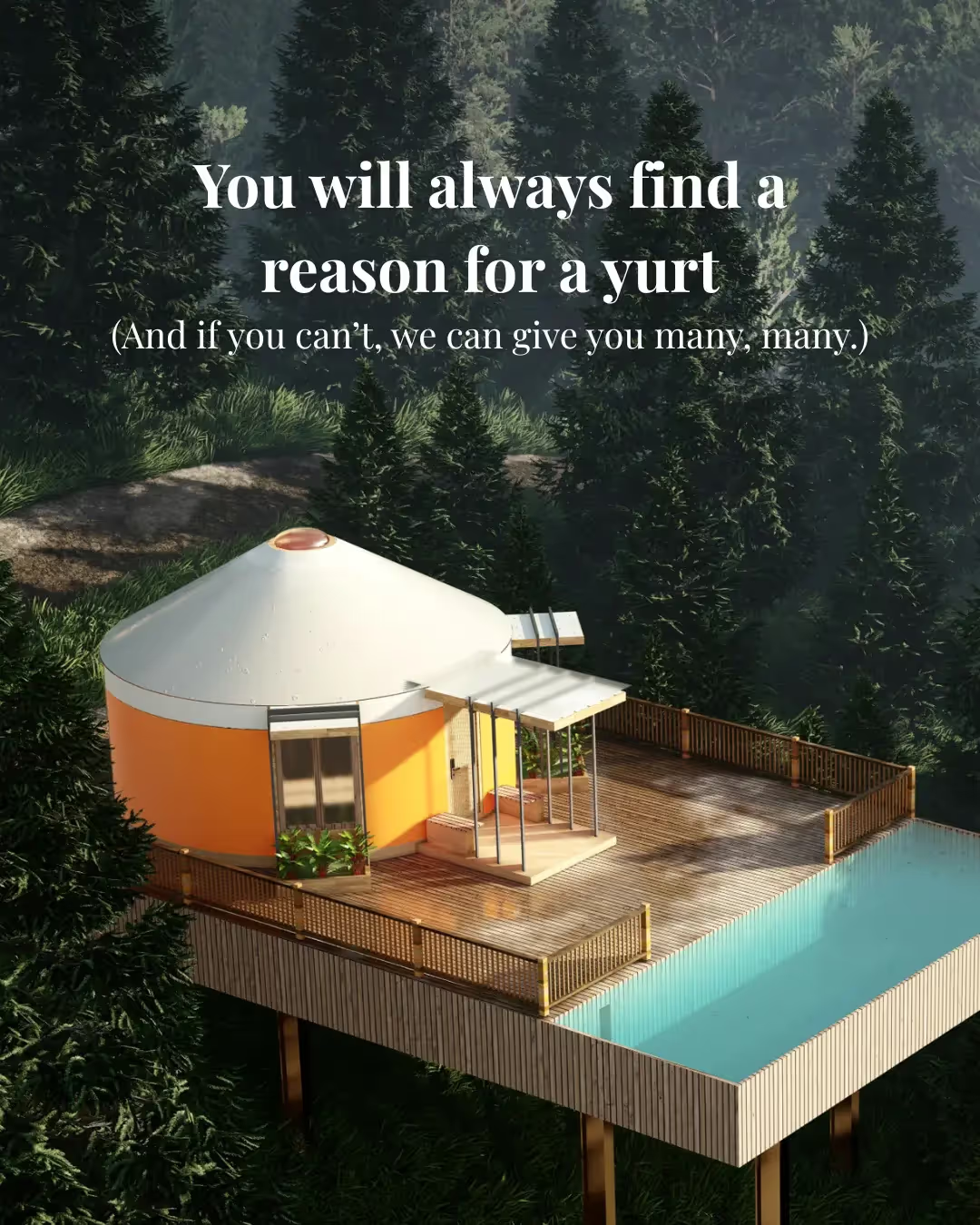


.webp)


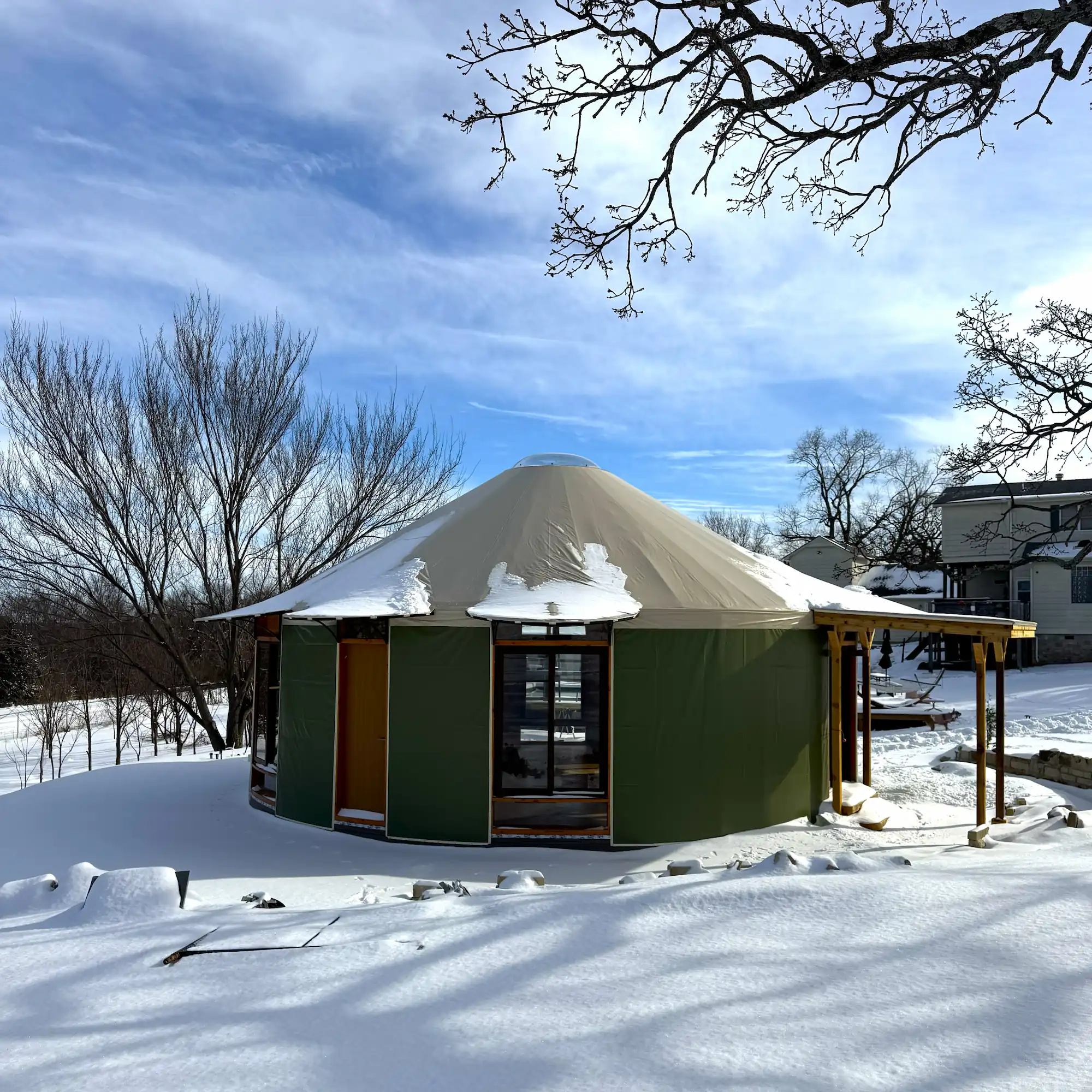
There is an image that captures the heart of every yurt dreamer: a round, glowing sanctuary nestled in a silent, snowy landscape. Inside, a fire crackles in a log burner, casting a warm light on the lattice walls. It's an image of perfect peace, comfort, and self-sufficiency.
I'm Praveen, the founder of The Out Factory, and I've spent countless winter nights in my own yurt, warmed by that very same fire. I can tell you that this dream is absolutely achievable. But I can also tell you that this magic is not a matter of chance; it's a matter of engineering, knowledge, and an unwavering commitment to safety.
A log burner is the heart of a four-season yurt, but it's also a serious piece of equipment that demands respect. This guide is designed to be your definitive starting point. We'll walk you through why a log burner is the perfect choice, break down the critical components of a safe system in detail, and help you understand the crucial process of choosing the right size for your space.
Why a Log Burner? The Heart of a Four-Season Yurt
In a world of modern heating, why does this classic appliance remain the top choice for yurt living? The reasons are both practical and profound.
- The Off-Grid Powerhouse: A log burner requires no electricity to run. When a winter storm rages and the power goes out, a log burner keeps your yurt warm and safe. This self-sufficiency is a core principle of yurt life, providing a deep sense of security and independence.
- A Dry, Radiant Heat: Unlike some heaters that can increase humidity, a log burner produces a dry, radiant heat. This is incredibly effective at warming the objects in the yurt, creating a thorough, bone-deep warmth. For climates that are cold and damp, like a British winter, this dry heat is invaluable for keeping the interior feeling fresh and preventing condensation.
- The Unbeatable Ambiance: Beyond the practicalities, a log burner is the emotional core of a winter home. The crackling sound of the fire, the mesmerizing dance of the flames, and the gentle glow it casts create an atmosphere of comfort and tranquility that no other heating system can replicate.
The Anatomy of a Safe Yurt Stove System
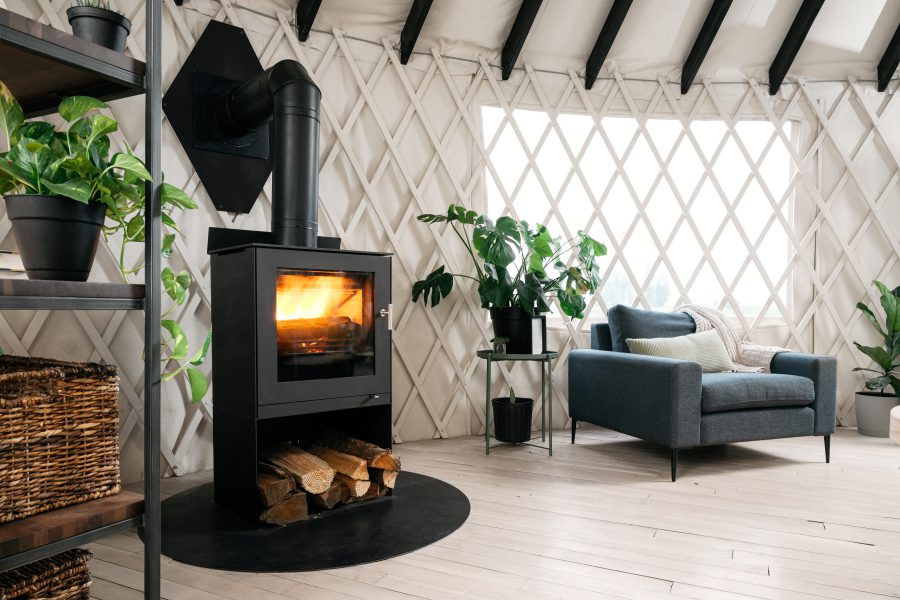
This is the most important section of this guide. A safe log burner installation is a system where every component works together perfectly. Skimping on any one of these parts is not an option.
The Stove Itself: Your Yurt's Engine
Modern log burners are highly efficient, clean-burning machines, typically made of heavy-duty cast iron or welded plate steel. The most important factor is its kW (Kilowatt) rating—the standard measure of heat output in the UK. We will cover sizing in detail later, but remember this: the goal is to get a stove you can run at a medium-to-high temperature, which is its most efficient and clean-burning range.
The Flue: Your Engine's Exhaust

The flue system carries smoke safely out of your yurt. It is not a single piece of pipe.
- Single-Wall Flue Pipe: The section of pipe directly connected to the stove and running up inside the yurt should be a single-wall flue pipe. It's designed to get hot and radiate extra heat into the room.
- Insulated Twin-Wall Flue: Where the pipe passes through the yurt roof and exits to the outside, you must use an insulated, twin-wall flue. This specialized pipe has a layer of insulation between two walls of steel, designed to keep the outer surface cool enough that it won't ignite the surrounding yurt materials. This is a non-negotiable safety feature.
The Heat Shields: Creating a Safety Bubble
A log burner radiates intense heat. To protect your yurt's walls and floor, you must create a "safety bubble" using non-combustible materials. This is all about clearances—the mandatory safe distance between the stove and any combustible surface.
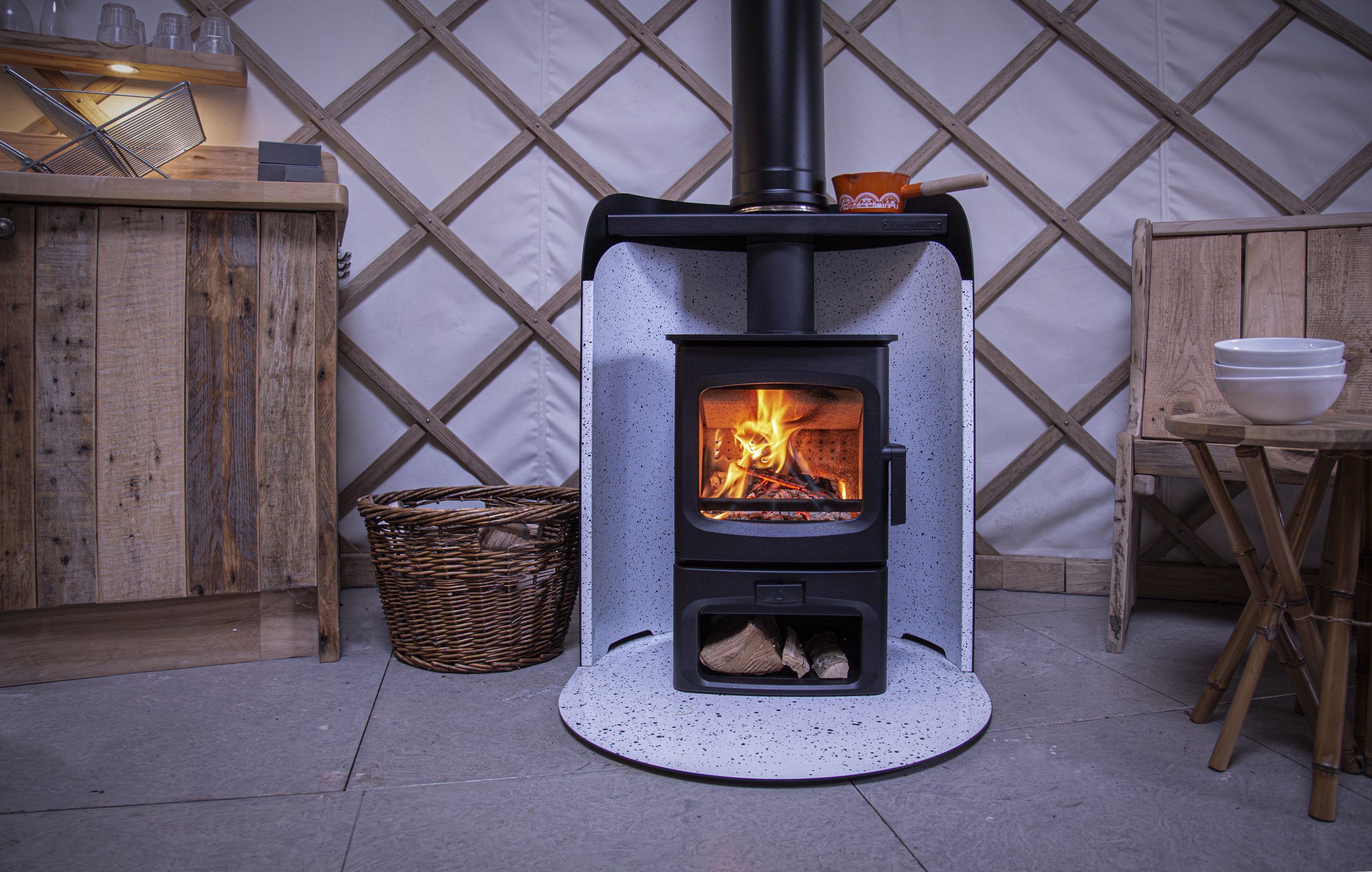
- A Floor Protector (Hearth): This fireproof base sits under the stove and extends in front of it to catch any stray embers. It can be made of stone, slate, tile, or glass.
- A Wall Heat Shield: You cannot place a stove right next to a yurt's fabric or wooden lattice wall. A heat shield—typically a sheet of metal or fire-resistant board—must be installed on the wall behind the stove. Crucially, it must be mounted with an air gap behind it to allow air to circulate and dissipate heat.
The Yurt Flue Flashing: The Most Critical Component
This is the one component where there is absolutely no room for compromise. A standard roof flashing from a builder's merchant is designed for a flat or tiled roof. It will fail on a yurt, causing leaks or a fire.
You must use a specialized yurt flue flashing kit. This kit is designed with a high-temperature silicone "boot" that is shaped like a cone. It fits over the flue pipe and creates a completely waterproof, flexible, and heat-proof seal against the angled roof of the yurt. Our Out Factory yurts are designed from the ground up to accommodate these essential kits.
A Crucial Note for UK Buyers: Understanding DEFRA & HETAS
In the UK, you must be aware of two critical acronyms:
- DEFRA: Many parts of the UK are designated "Smoke Control Areas." To legally burn wood in these areas, you must use a stove that is DEFRA-approved (or "exempt"). These stoves are certified to burn wood so cleanly that they produce very little smoke. Always check your local council's rules.
- HETAS: This is the official body that approves and certifies solid fuel heating appliances and installers. For safety and insurance, your installation must be carried out by a HETAS-registered installer who can provide a certificate of compliance.
Sizing Your Stove: How Many kW Do You Really Need?
Choosing the right size stove is a crucial decision. The biggest mistake people make is thinking "bigger is better."
- A Stove That's Too Small: It will constantly run at its maximum capacity, working too hard and failing to keep the space truly warm on the coldest nights.
- A Stove That's Too Big: This is the more dangerous option. It will heat the yurt too quickly, forcing you to constantly run it at a low smolder. This inefficient burn leads to a rapid and dangerous buildup of creosote in your flue—the leading cause of chimney fires.
The goal is a stove you can run at a steady, medium-to-high burn. The key factors are your yurt's size, your climate, and the quality of your yurt's insulation. A well-insulated yurt, like our 4-layer structures, requires a much smaller stove than you might think.
Sizing for The Out Factory Yurts
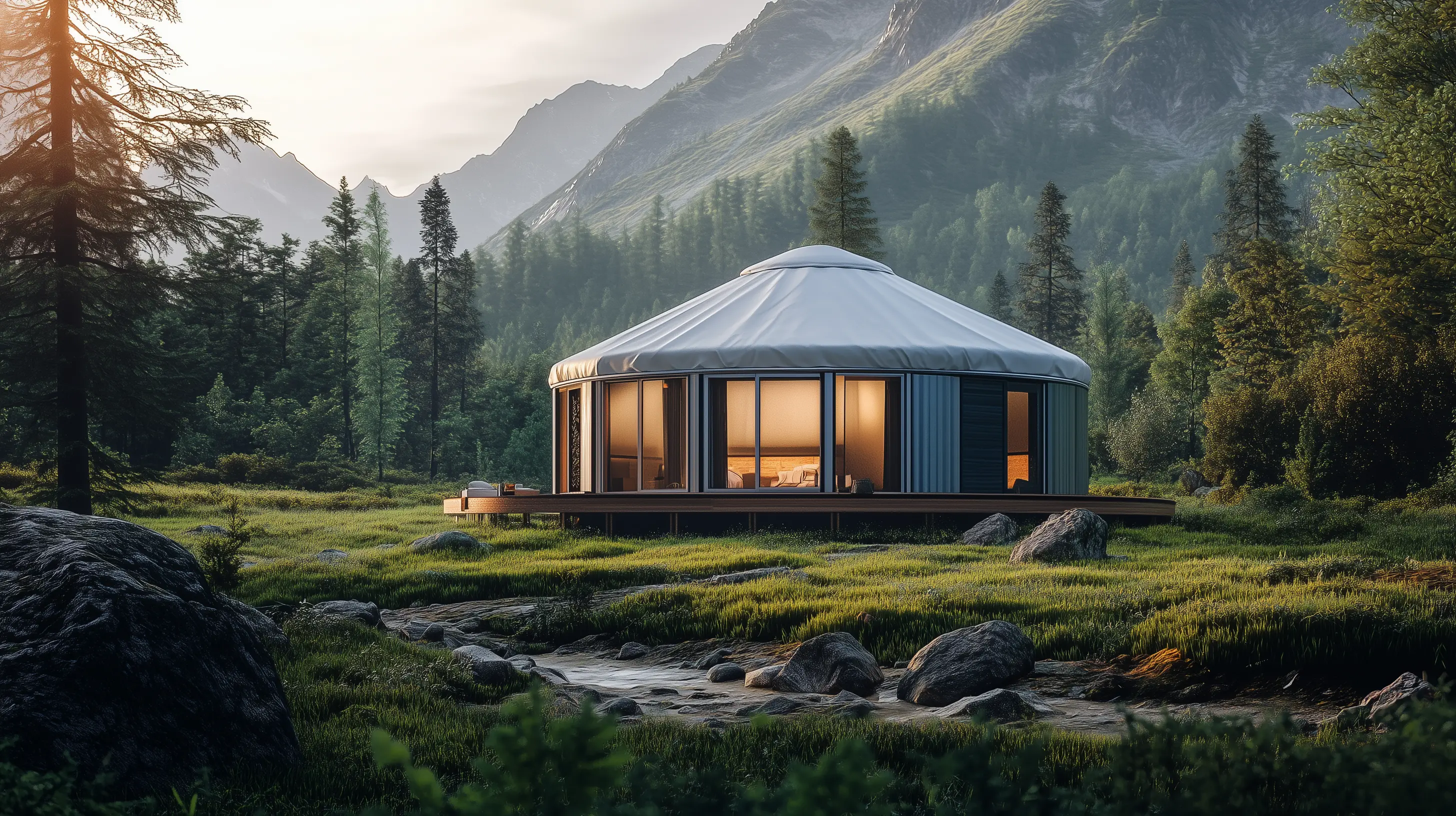
Here are some starting points for our yurt sizes for a typical UK winter, accounting for our superior insulation:
- For the TOF6 (29 sqm): Look for a stove in the 3-4 kW range. A small, high-efficiency stove is perfect for this cozy space.
- For the TOF7 (42 sqm): A stove in the 4-5 kW range is ideal, giving you plenty of power for the coldest nights without being oversized.
- For the TOF10 (75 sqm): You will need a larger stove in the 5-8 kW range to comfortably heat this spacious area.
Your Journey to a Warm Yurt: The Next Steps
This guide is your foundational starting point, but your journey doesn't end here. Heating your yurt safely involves several more crucial steps. To guide you, we are creating a complete series on this topic.
- Ready to Install? Our next article, "How to Safely Install a Log Burner in Your Yurt," will be a detailed, step-by-step guide.
- Comparing Models? In our upcoming review, "Best Log Burners for Yurts," we'll provide specific recommendations for stoves that are proven to work well for each of our yurt sizes.
- Tempted by a Cheaper Tent Stove? Before you make a costly mistake, read our essential guide, "Hot Tent Stoves vs. Yurt Stoves: What’s the Difference?"
- Thinking Long-Term? Don't miss our "Seasonal Maintenance Checklist for Yurt Log Burners" to keep your system running safely.
Conclusion: The Heartbeat of Your Home
A log burner is more than just a heater; it's the heartbeat of a winter yurt. By understanding the entire system, respecting the non-negotiable safety requirements, and choosing the right appliance for your space, you can turn that romantic image of a glowing yurt in the snow into your own warm and wonderful reality.
FAQs
1. Is it really safe to have a log burner in a yurt?
Yes, absolutely, but only if it's done correctly. With a proper installation that includes a CE-marked stove, a twin-wall flue, a specialized yurt flashing kit, and strict adherence to safe clearances, a log burner is a perfectly safe and reliable heating source.
2. Can I install a log burner myself?
While some aspects can be a DIY project, we strongly recommend hiring a HETAS-registered installer for the final installation and commissioning. This ensures your system is safe, compliant with UK regulations, and will be accepted by your insurance provider.
3. Where in the yurt is the best place for a stove?
This depends on your layout. A stove placed near the center of the yurt will distribute heat most evenly. However, placing it closer to a wall (with proper heat shields) can free up the central living space. Our team can help you design a layout that works best for your needs.
4. Will a log burner affect my yurt insurance?
It can. Most UK insurance providers will cover a yurt with a log burner, but only if it has been installed by a qualified professional (like a HETAS installer) and you have the proper certificate of compliance. Always speak to your insurance provider before you begin.
uniquely yours?
Explore Limitless options in our 3d yurt builder
and bring your vision to life

Share Blog
.jpg)
.jpg)
.jpg)
.jpg)
.webp)