


.webp)

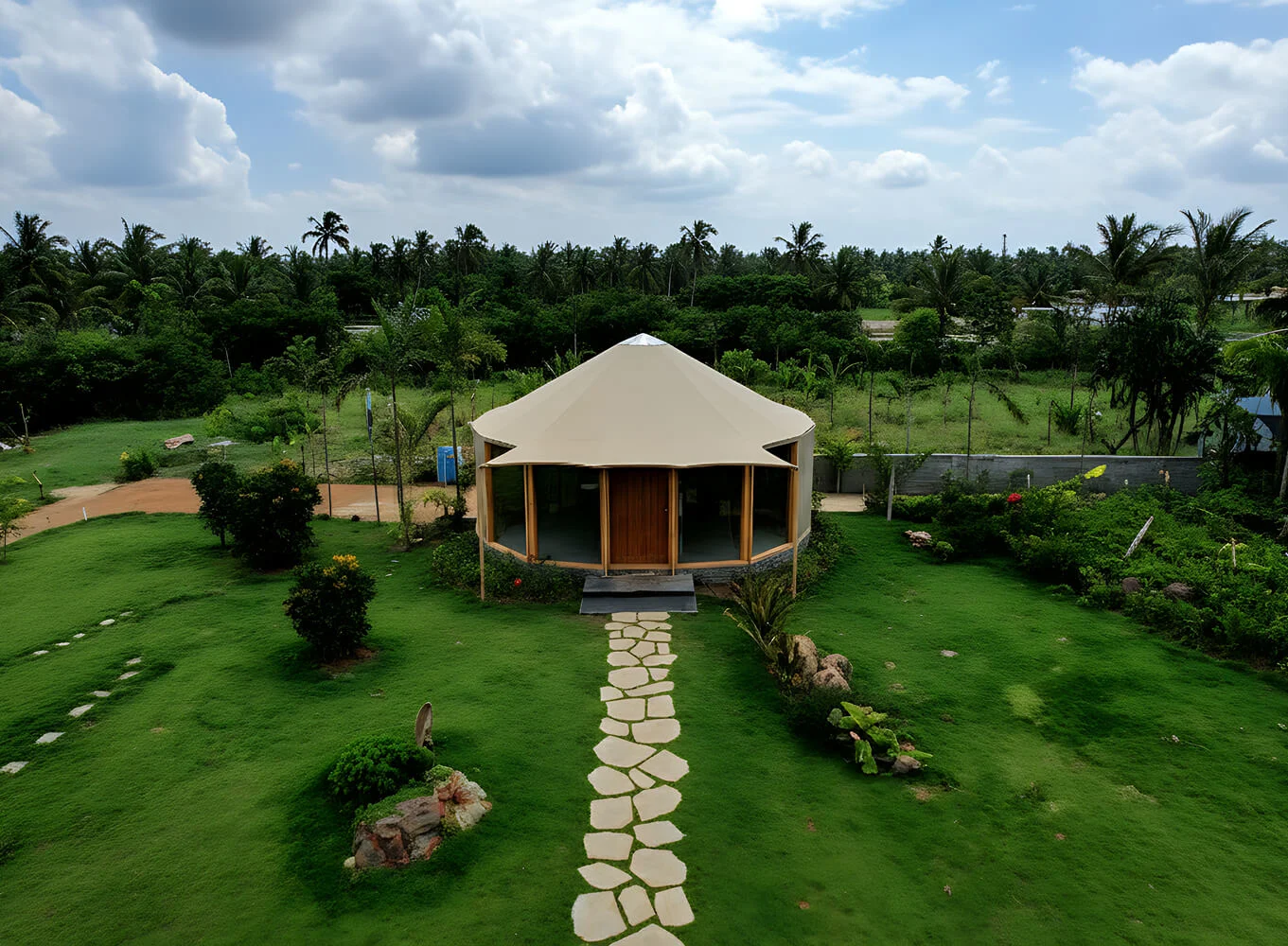
You've written the business plan, secured the land, and chosen your structures. Your project is officially a business.
The next step—permitting—is where the rules change completely. Building a backyard guest house for personal use is one process; building a hospitality business that hosts the public is another. The building code's primary concern shifts from "protecting one family" to "protecting the general public."
I'm Praveen, and I've guided commercial glamping projects across the world. The biggest mistake entrepreneurs make is treating their first glamping unit like a residential home, only to be stopped by the fire marshal or the health department.
This guide will demystify the commercial permitting process in Canada by defining the four critical areas where Provincial Building Codes (based on the NBCC) impose strict and non-negotiable requirements. Understanding these rules is the difference between a project that launches successfully and one that is dead on arrival.
The Code Shift — When "Residential" Becomes "Commercial"
The permitting process changes because your use of the structure changes. As a commercial hospitality business, you are governed by the National Building Code of Canada (NBCC) and its provincial adoption (e.g., the Ontario Building Code, BC Building Code), not just the simpler residential codes.
The NBCC and provincial codes classify a transient short-term rental or glamping resort as a Group C (Residential - Transient) or a Group A (Assembly) Occupancy, depending on the scale. This classification is the trigger for all the strict commercial codes that follow.
The Four Areas Where Commercial Rules Apply
1. Life Safety & Egress (The Exit Rules)
The number one priority of a commercial code is life safety for the public.
- The Commercial Requirement: Your classification triggers stringent requirements for the number and size of exits (NBCC Division B, Part 3). You must prove that every guest can exit the structure quickly and safely in the event of an emergency. This often means:
- Exit Widths: Doors and pathways must meet minimum egress widths.
- Emergency Lighting & Signage: Requirement for illuminated exit signs and dedicated emergency lighting (required under the Fire Code).
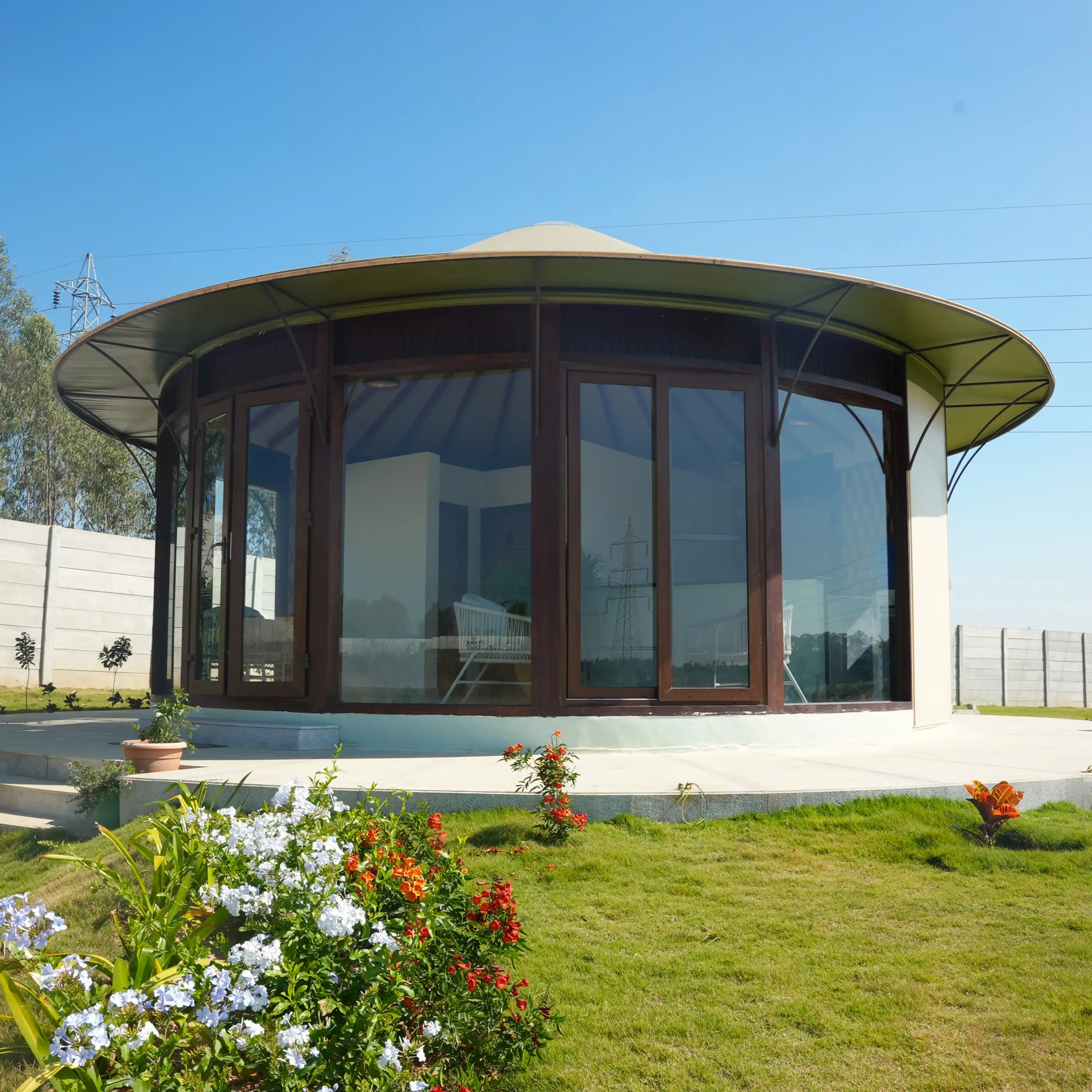
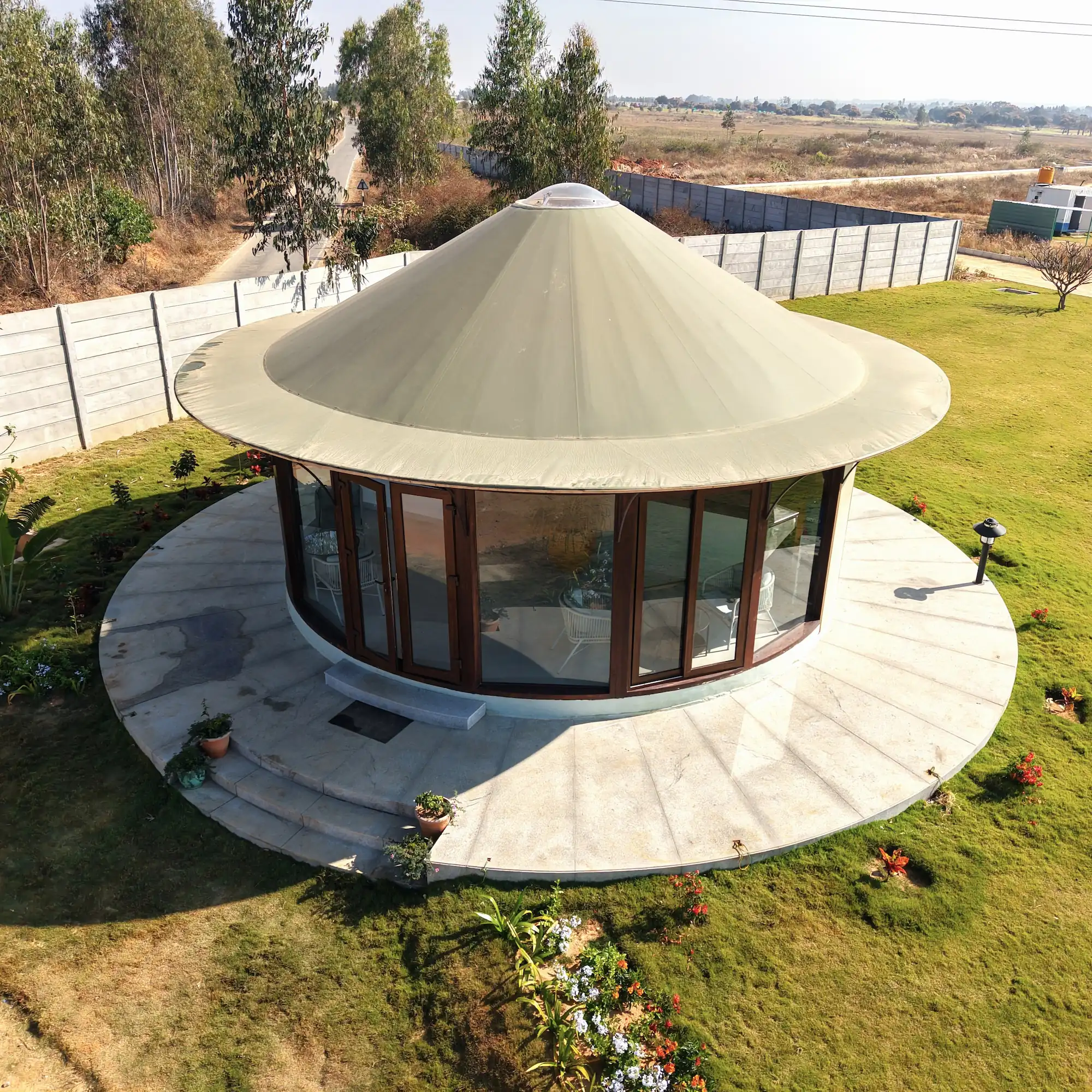
- The Operator's Task: Work with your fire marshal early. Our larger yurts are designed to accommodate the necessary door widths and clear exit paths, simplifying this compliance step.
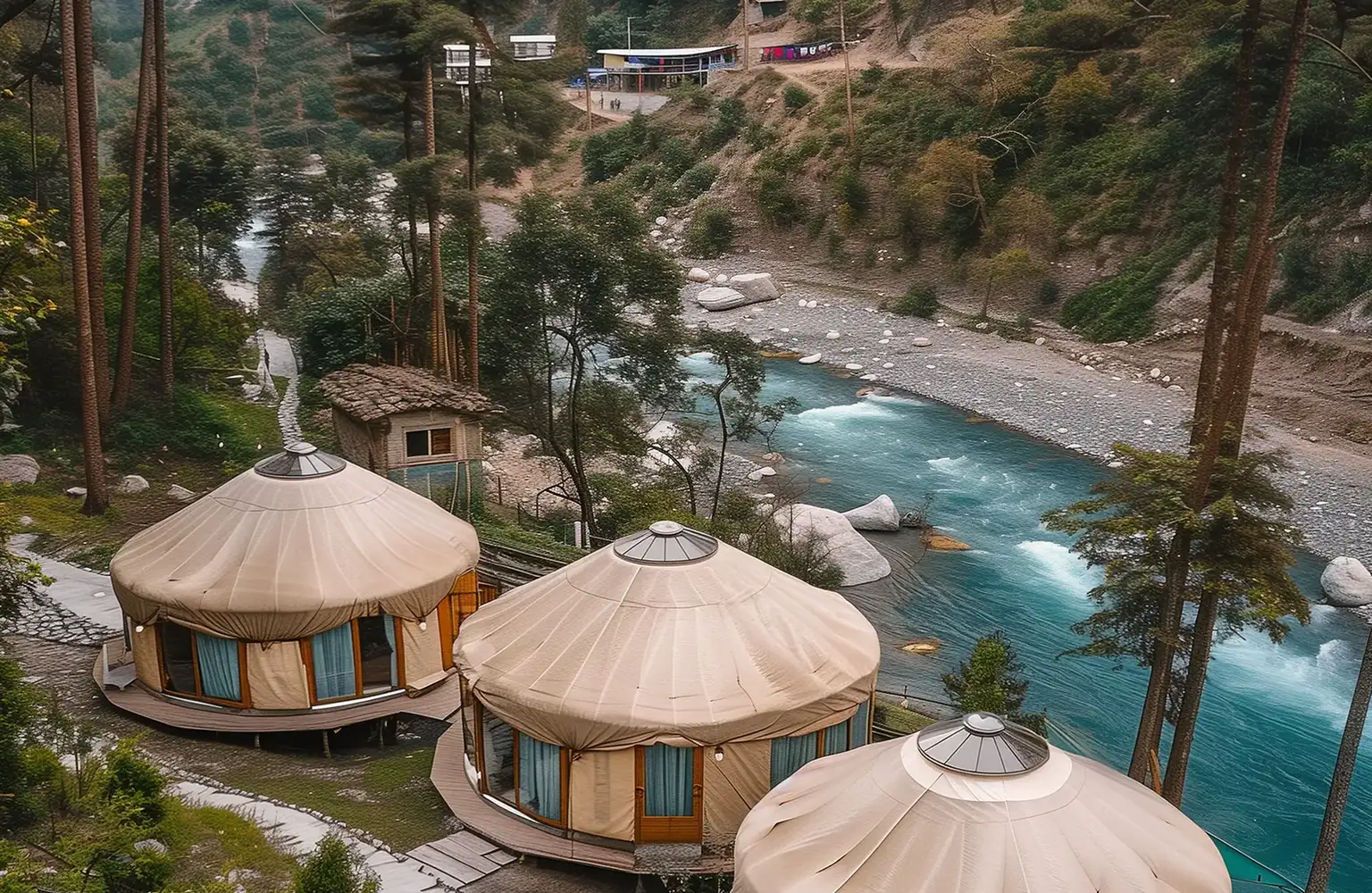
2. Infrastructure & Health (The Utility Rules)
Commercial use generates significantly more stress on water, waste, and fire systems, which is governed by the Health Department and Fire Code.
- The Commercial Requirement: Your septic and sewer systems must be designed and engineered for a commercial occupancy load and must be approved by the local Health Unit (or equivalent). A system designed for a four-person cottage will fail if it's used by ten different people every week. Specific requirements apply to fire suppression infrastructure:
- Commercial-Grade Septic: Required to handle high, rapid waste volume.
- Fire Suppression Water Supply: Many remote sites require a large cistern or dedicated pond/reservoir and pump system to ensure the local fire department has access to adequate water volume for fire fighting.
- The Operator's Task: Budget for a commercial-grade septic design approved by the local Health Unit. This is more expensive but non-negotiable for approval.
3. Accessibility (The AODA/Provincial Access Rules)
As soon as you open your doors to the public, you become subject to Provincial Accessibility Acts (like the AODA in Ontario or specific requirements in the BC Building Code).
- The Commercial Requirement: You are required to provide a minimum number of units that are fully accessible. This means:
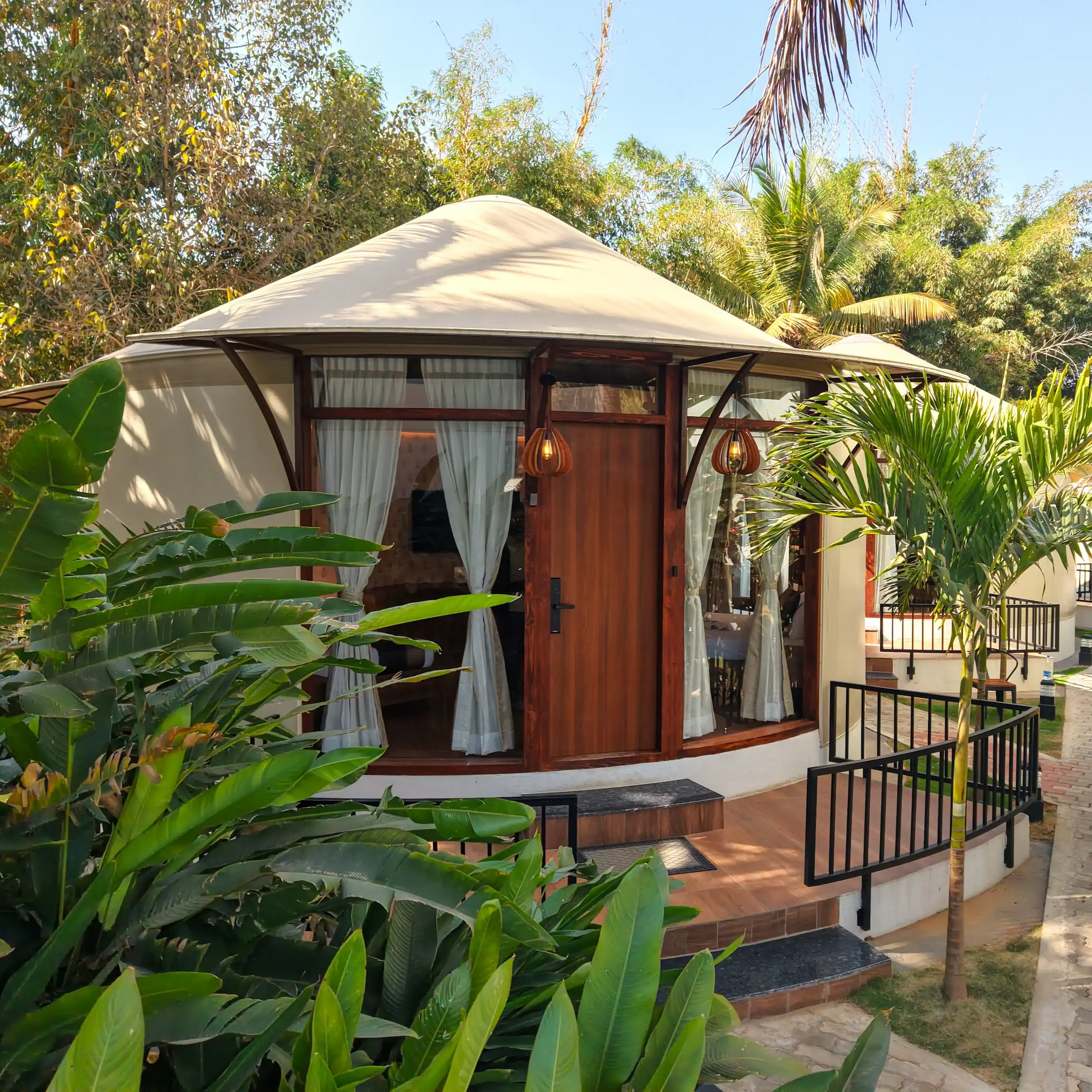
- Accessible Paths: Ramps must replace stairs to the platform.
- Unit Layout: Wider doorways, accessible washrooms with grab bars, and lower counters (NBCC Appendix A and Provincial Codes).
- The Operator's Task: Do not wait until after construction. Plan for accessibility compliance before you pour the foundation. Our circular yurts are inherently flexible for ramp installation, but the interior must be designed specifically for accessibility.
4. Zoning & Land Use (The Business Rules)
This is often the biggest hurdle. You need permission for a "Change of Use."
- Residential Standard: Your land is zoned for a residential cottage or home.
- Commercial Standard (Planning Department): You need explicit municipal zoning approval for "Commercial Accommodation," "Tourist Establishment," or "Campground" use. This often triggers requirements for:
- Parking Minimums: You must provide a specific number of designated, paved, or graveled parking spots per unit (local zoning bylaw).
- Public Consultation: The rezoning process often requires public hearings and neighbor notification.
- Traffic Review: Larger projects may require formal traffic studies.
- The Operator's Task: Approach your municipal Planning Department first. Do not invest in infrastructure until you have written approval for your commercial use.
Conclusion: Commercial Permits Are an Investment, Not a Burden
Commercial permitting is more complex, but it's the process that legitimizes your business. It's the investment that protects your customers, your brand, and your long-term bottom line.
The key to success is pairing your unique glamping vision with professional engineering that addresses every one of these commercial codes.
At The Out Factory, we provide more than a structure. We provide the professional engineering packages (with structural data benchmarked to ASCE 7-10), fire retardancy certifications (CAN/ULC S109), and expert consultation needed to have a confident conversation with every single department—from the fire marshal to the health unit. You are not alone in navigating this.
uniquely yours?
Explore Limitless options in our 3d yurt builder
and bring your vision to life

Share Blog


.jpg)
.jpg)
.jpg)
.jpg)
.webp)