


Snow Load Calculations for Yurts: Demystifying the Formula for Alpine Safety

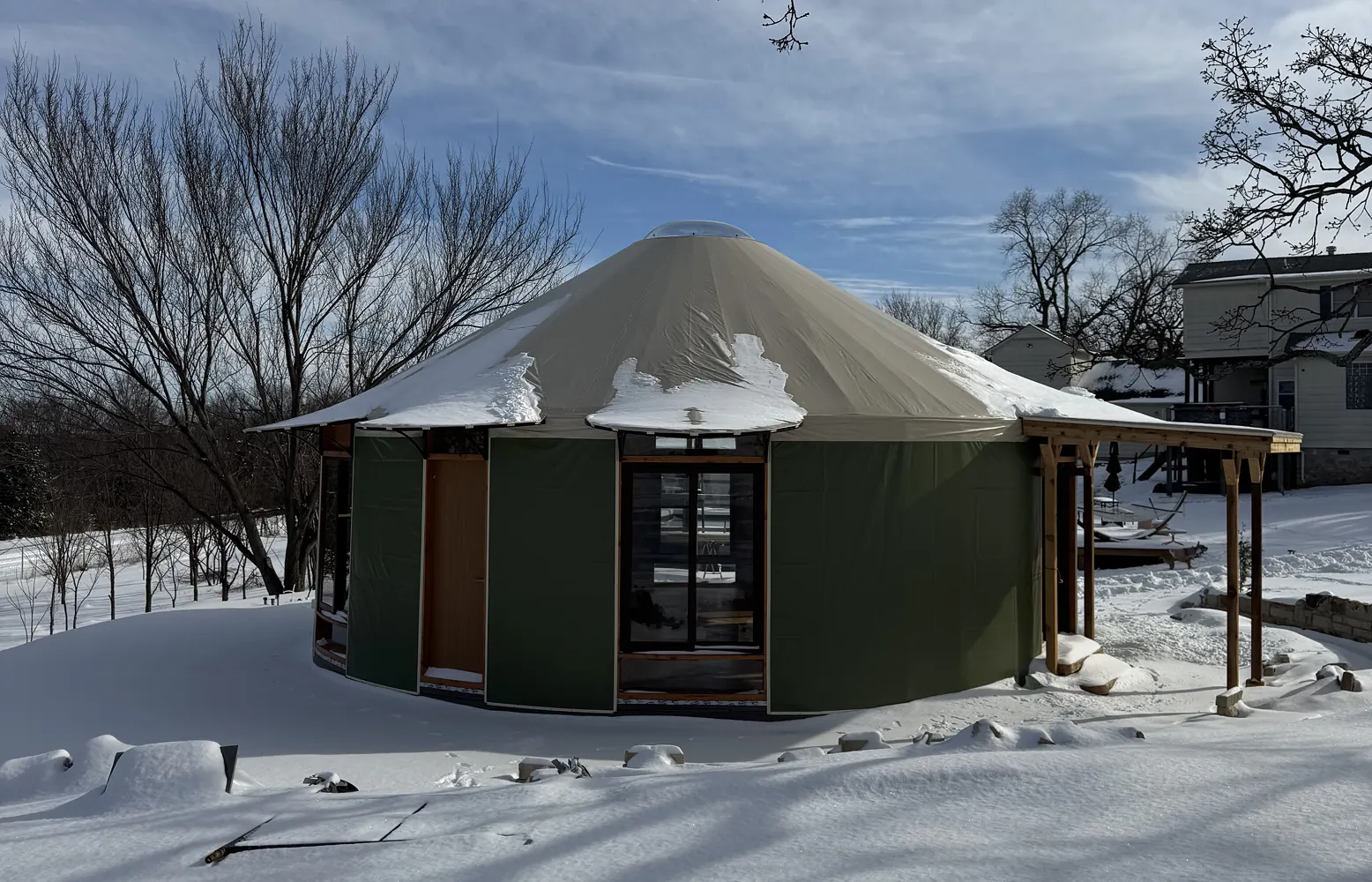
When you build a yurt in a snow-prone environment, the most critical number in your entire project is your Roof Snow Load. Snow is not light. A single foot of wet, heavy, compacted snow can weigh over 50 pounds per square foot (psf) or 2.4 Kilopascals (kPa). Your roof is the only thing standing between your guests and that immense weight.
This is not the place to guess.
This guide is designed to empower you with the knowledge to speak confidently to any engineer or building official, anywhere in the world. We will demystify the intimidating math behind snow load, breaking the complex engineering process into three clear steps that prove your roof is structurally sound.
Step 1: Find Your Ground Snow Load (Pg)
The first number you need is the Ground Snow Load (Pg). This is the official measurement of the maximum expected snow weight on the ground in your specific geographic area.
- How to Find It: This number is provided by your local building authority (County, Municipality, or Council). It is derived from decades of historical weather data. You cannot calculate it yourself.
- Actionable Tip: Call your local building department and ask for the official Ground Snow Load for your property's address.
- The Units:
- Imperial (US/Canada): Measured in Pounds per Square Foot (psf). (e.g., 80 psf)
- Metric (International): Measured in KiloPascals (kPa). (e.g., 3.83 kPa)
Step 2: Calculate the Roof Snow Load (Ps) — The Universal Formula
Your local inspector does not use the Ground Snow Load (Pg) to check your roof; they use the Roof Snow Load (Ps). This load is always lower than the ground load because roofs are sloped, warmer, and exposed to wind.
Engineers use a standard formula to move from the Ground Load to the Roof Load. We will introduce a simplified version of this formula that highlights the critical factors:
The Yurt Advantage (The Roof Slope Factor - Cs)
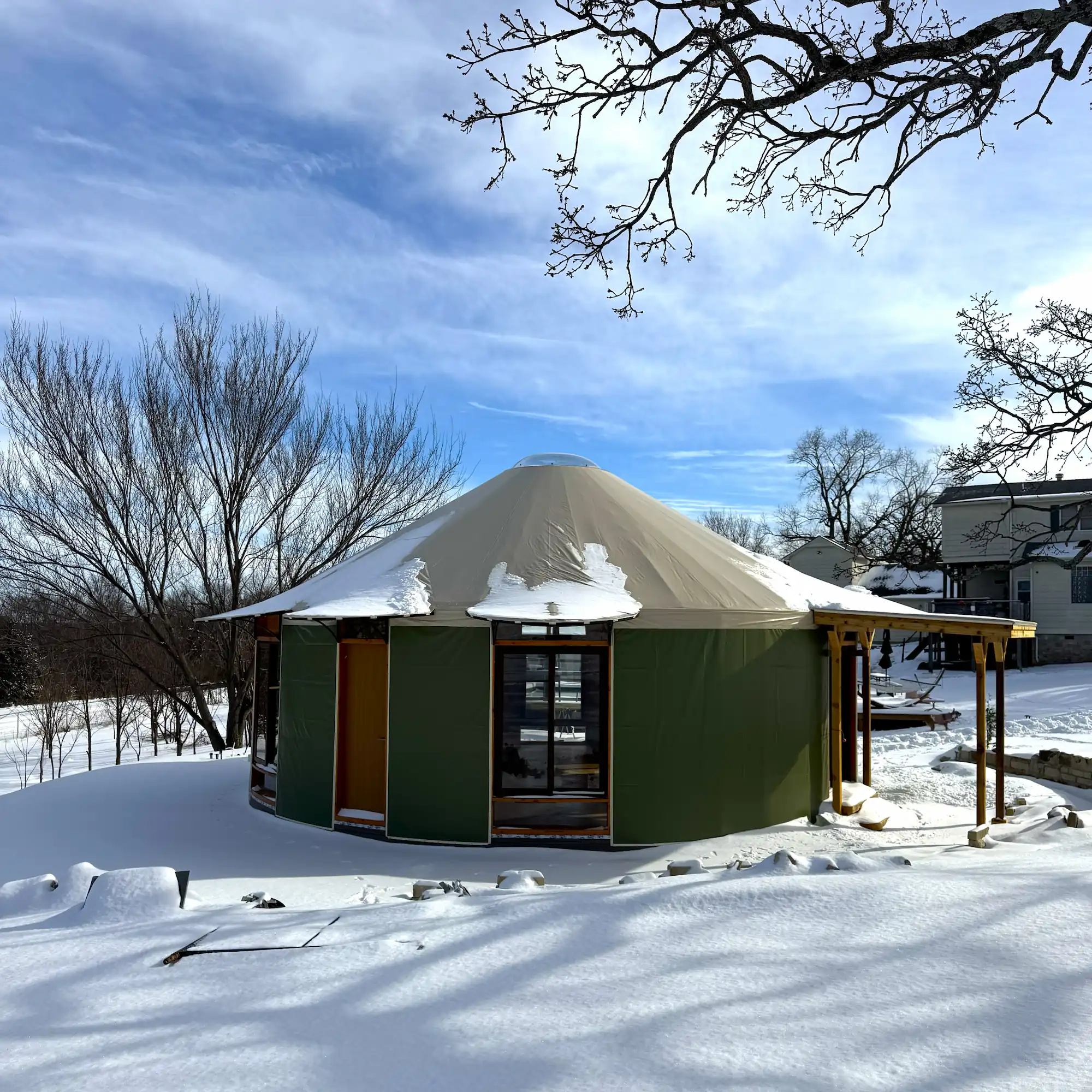
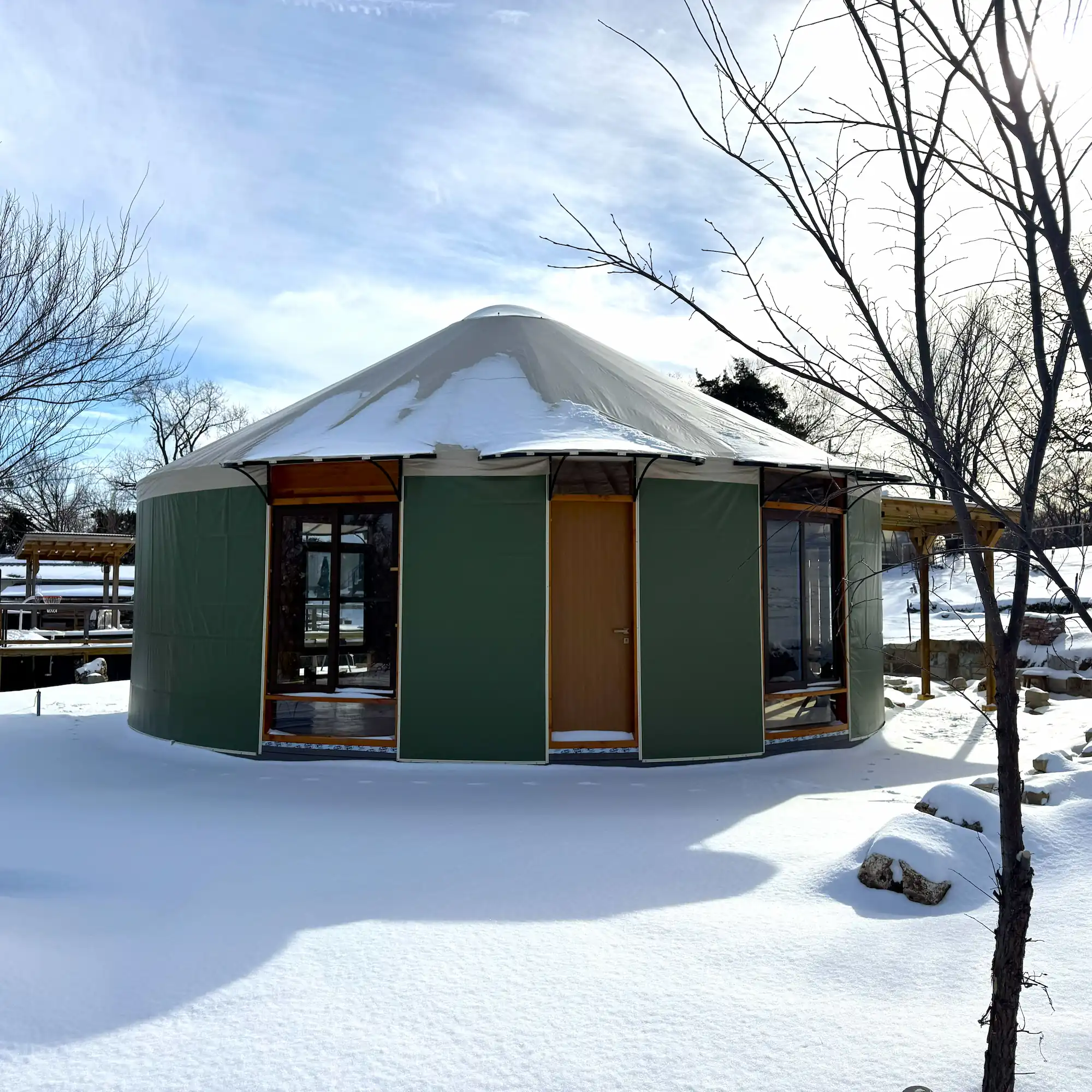
The yurt's conical design is your biggest advantage in this calculation. Because the roof is not flat, snow tends to slide off quickly. This property allows for a significant reduction in the final Ps number that the structure needs to bear. The steeper the slope, the lower the calculated Ps.
Step 3: Match Your Ps to Your Yurt’s Structural Rating
This is where the calculation meets the product. The calculated number from Step 2 (your required Ps) must be lower than the manufacturer's structural rating for the yurt.
- The Out Factory Proof: We engineer our yurts to a heavy-duty rating that allows you to confidently build in demanding alpine environments.
- Our Structural Rating: We engineer our yurts for a snow load of 2.87 kPa, which is equivalent to 60 psf.
- The Safety Margin: If your local required Ps is, for example, 45 psf (2.15 kPa), our 60 psf (2.87 kPa) rating gives you a crucial 33% safety margin that building inspectors love to see.
Actionable Tip: Demystifying the Units
When comparing manufacturer ratings, you must use the same units. Use this quick conversion:
- 1 kPa (Kilopascal) is equivalent to 20.9 psf (Pounds per Square Foot).
- To convert a rating from psf to kPa, divide by 20.9.
- To convert a rating from kPa to psf, multiply by 20.9.
Conclusion: The Formula for Safety
Snow load is a math problem, not a myth. By understanding this simple, three-step formula—finding the Ground Load, calculating the Roof Load, and matching it to your yurt's rating—you transform an intimidating engineering requirement into a clear, manageable process. You ensure your roof is structurally sound and you gain the ultimate peace of mind.
This is the level of engineering we build into every yurt. Our team provides you with all the structural data and professional calculations necessary to demonstrate to your local building official that your roof is ready for whatever winter brings.

uniquely yours?
Explore Limitless options in our 3d yurt builder
and bring your vision to life
Share Blog









.jpg)
.jpg)
.jpg)
.jpg)

.webp)