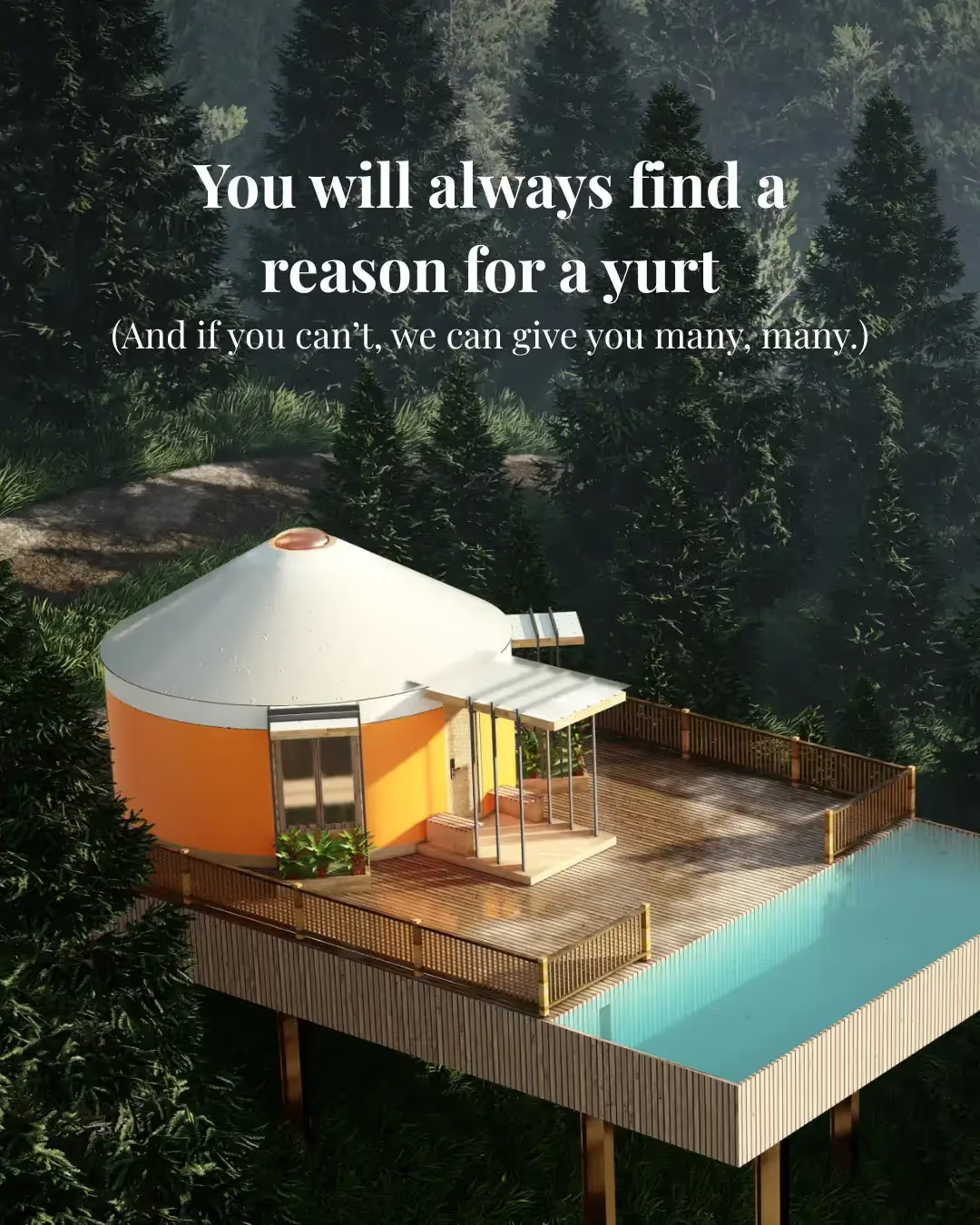




When people think about yurts, they picture fabric, light, and a circular form. That is the surface story. The real story starts with frames.
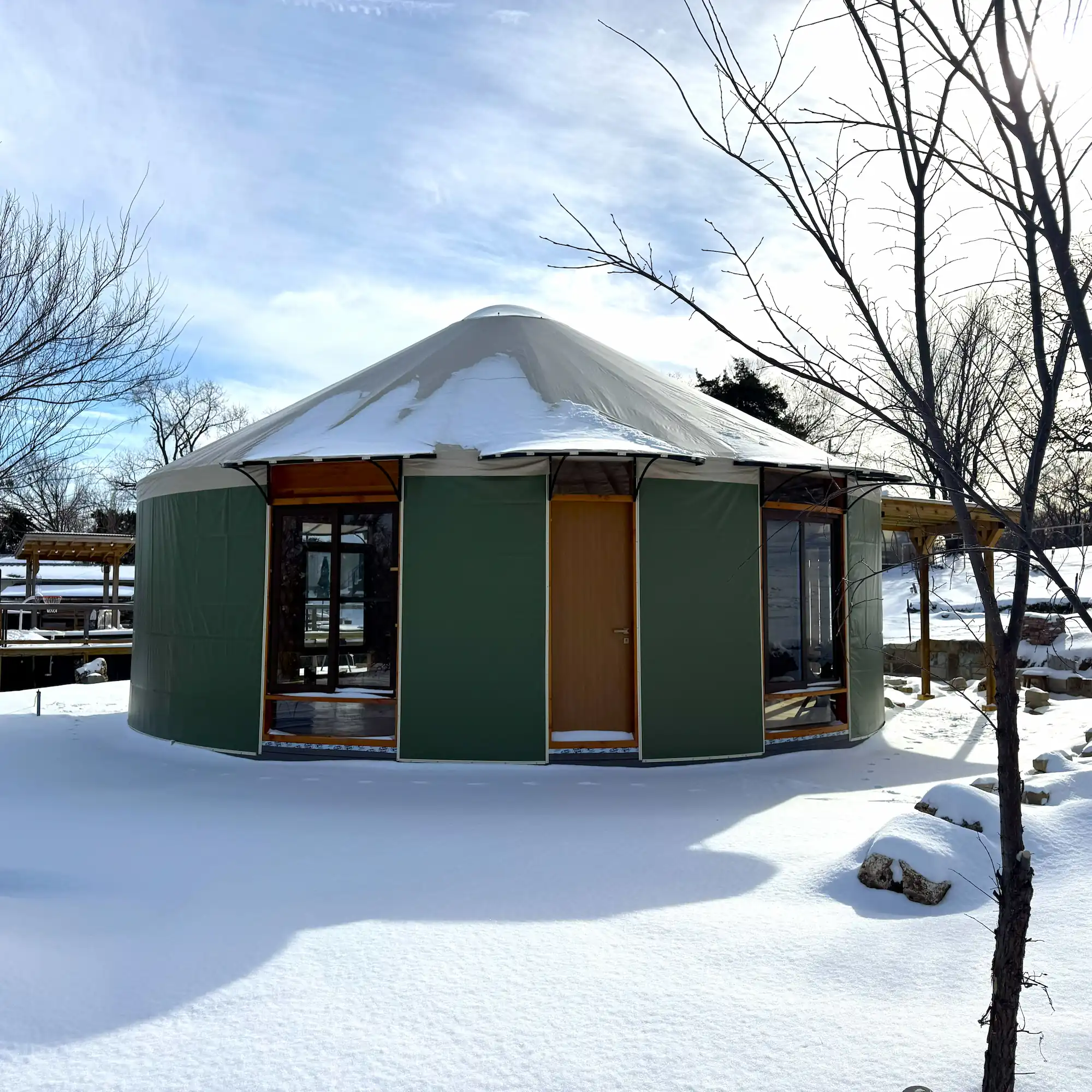
At The Out Factory, we are first in class to treat window and door frames as structural elements, not accessories. We do not cut holes into fabric and patch them with roll-up vinyl or zip-up panels. We design the structure first.Openings are resolved during design, not added later.
The Shift From Roll-Up Openings to Structural Frames
Most yurts rely on roll-up or zip-up windows because they are easy to add after fabrication. They also:
- Do not carry load
- Distort fabric over time
- Create weak sealing points
- Feel temporary
They solve ventilation, but they do not solve structure or longevity.
We took a different approach. If a window is meant to connect you to the outdoors, it must be framed, fixed, and intentional.
Frames That Carry Load, Not Just Glass
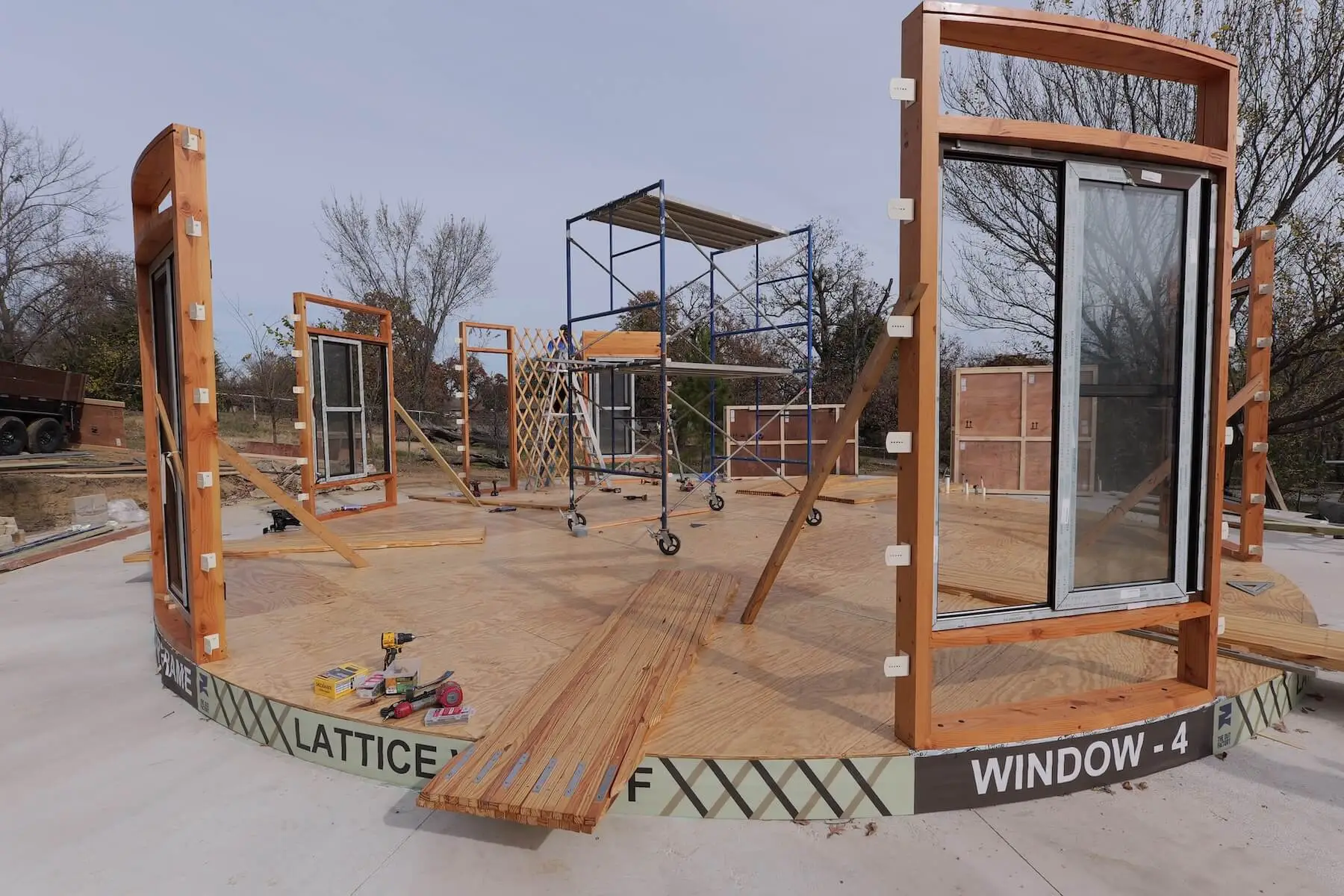
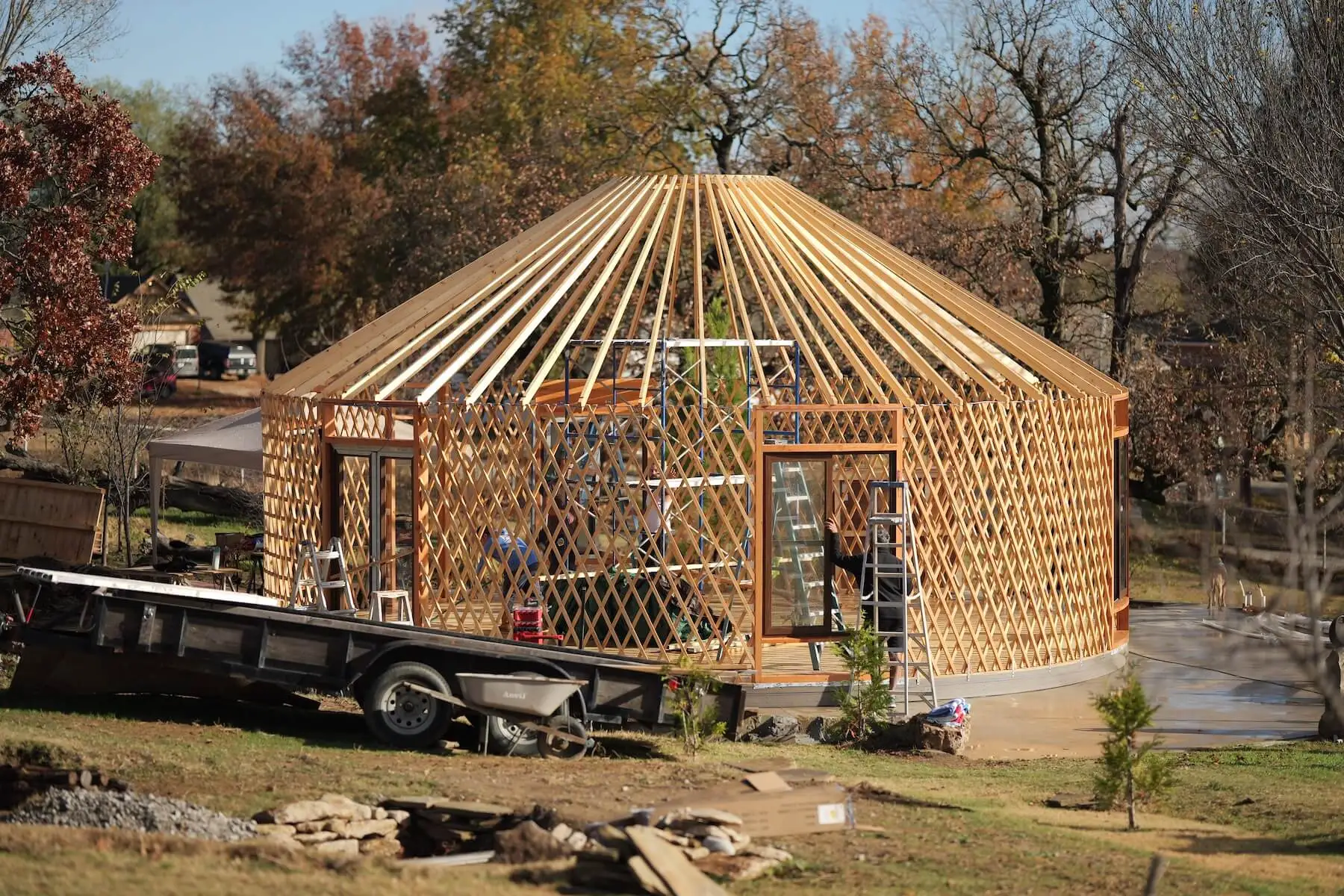
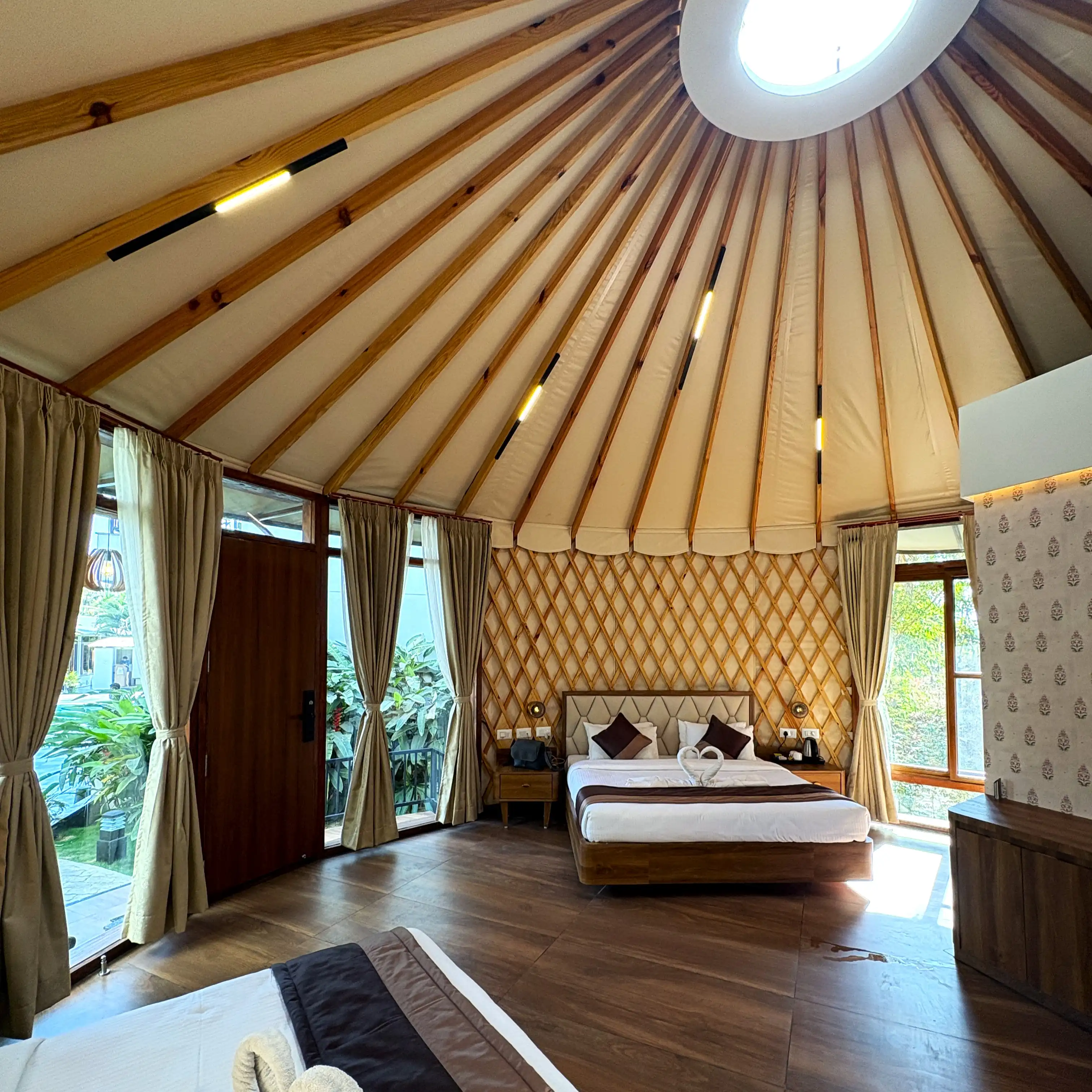
Every TOF door and window begins with a structural frame. These frames are not decorative elements. They are load-bearing edges designed into the yurt from the start.
Each frame:
- Anchors the fabric skin
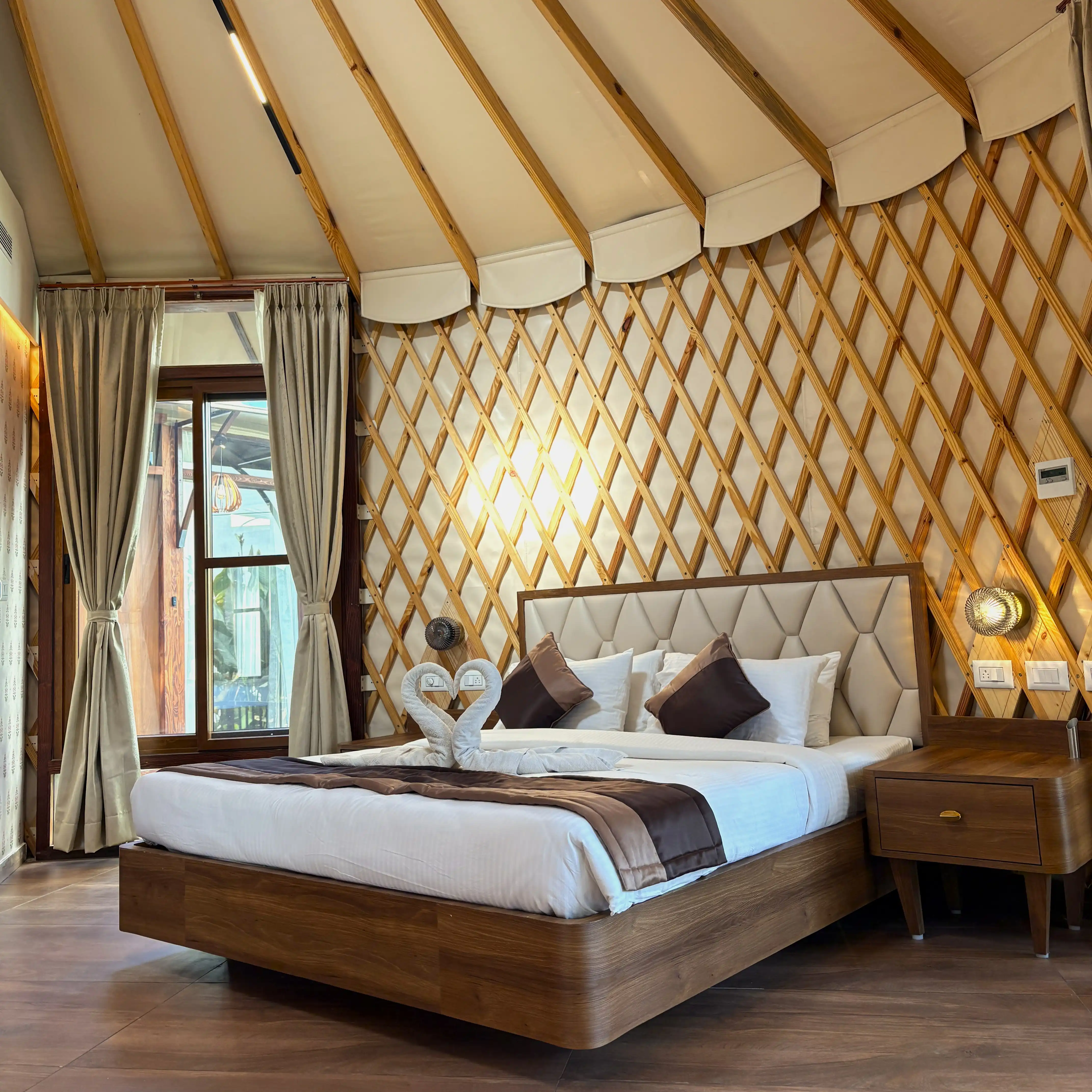
- Locks into the lattice rhythm
- Transfers load directly to the platform
- Controls geometry at high-stress zones
This design choice is what sets TOF apart. Openings reinforce the structure instead of weakening it.
First-in-Class Frame Specification
All TOF openings follow the same structural frame logic.
- Section size: 2.5” × 5”
- Material: Douglas Fir or Yellow Cedar
- Standard height: 9’
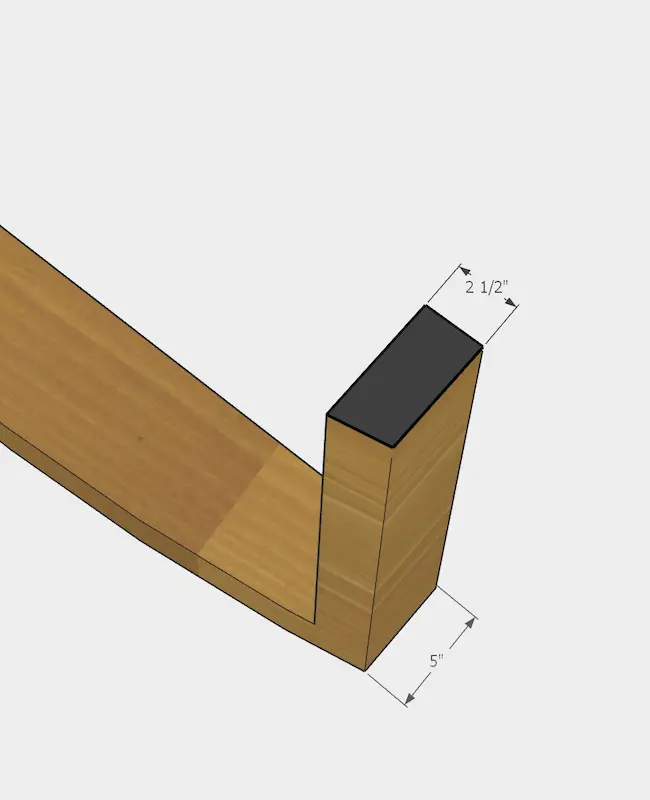
These are thick, stable members chosen for long-span performance and predictable behavior across climates. Because frames are standardized, the system stays robust even as layouts vary.
Design-Stage Modularity
TOF’s modular logic applies during the design stage itself. Door and window frames are planned, sized, and positioned before manufacturing begins.
This allows:
- Multiple doors and windows
- Wide panoramic spans
- Repeating window modules
- View-driven layouts
Doors Designed Into the Frame System
A yurt door frame does more than allow entry.
It must:
- Lock lattice ends precisely
- Remain square within a circular plan
- Act as a hard stop for fabric tension
- Transfer loads cleanly to the platform
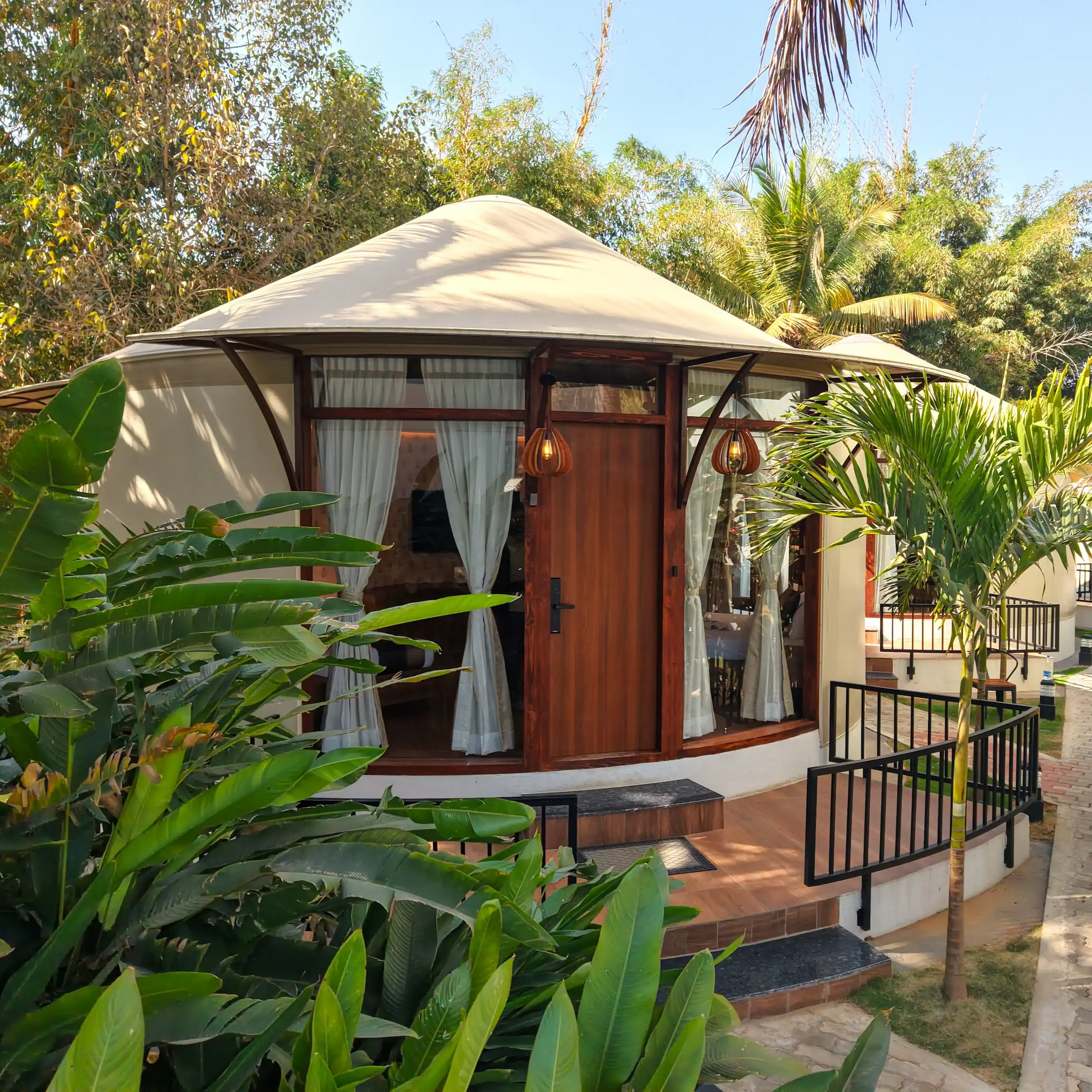
This is why all TOF doors are installed into pre-engineered frames.
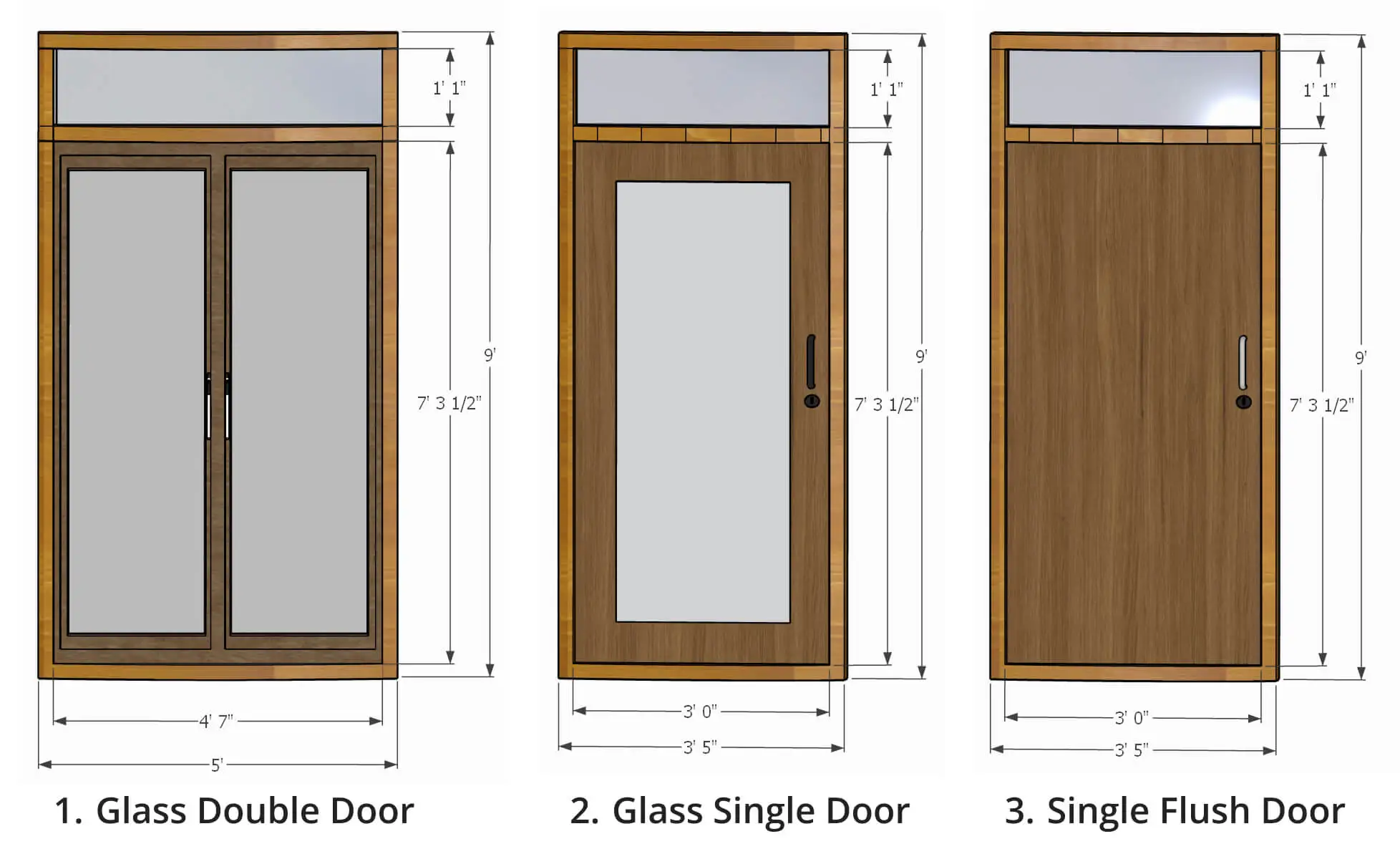
Standard Door Modules
- Glass double doors: 9’ × 5’
- Glass single doors: 9’ × 3’
- Single flush doors: 9’ × 3’
Wood and uPVC options are available.Wood-finish uPVC is commonly preferred for durability and low maintenance.
Windows That Feel Architectural
TOF does not use roll-up vinyl or zip-up windows. Windows exist to create a real connection to the outside, not temporary openings in fabric.
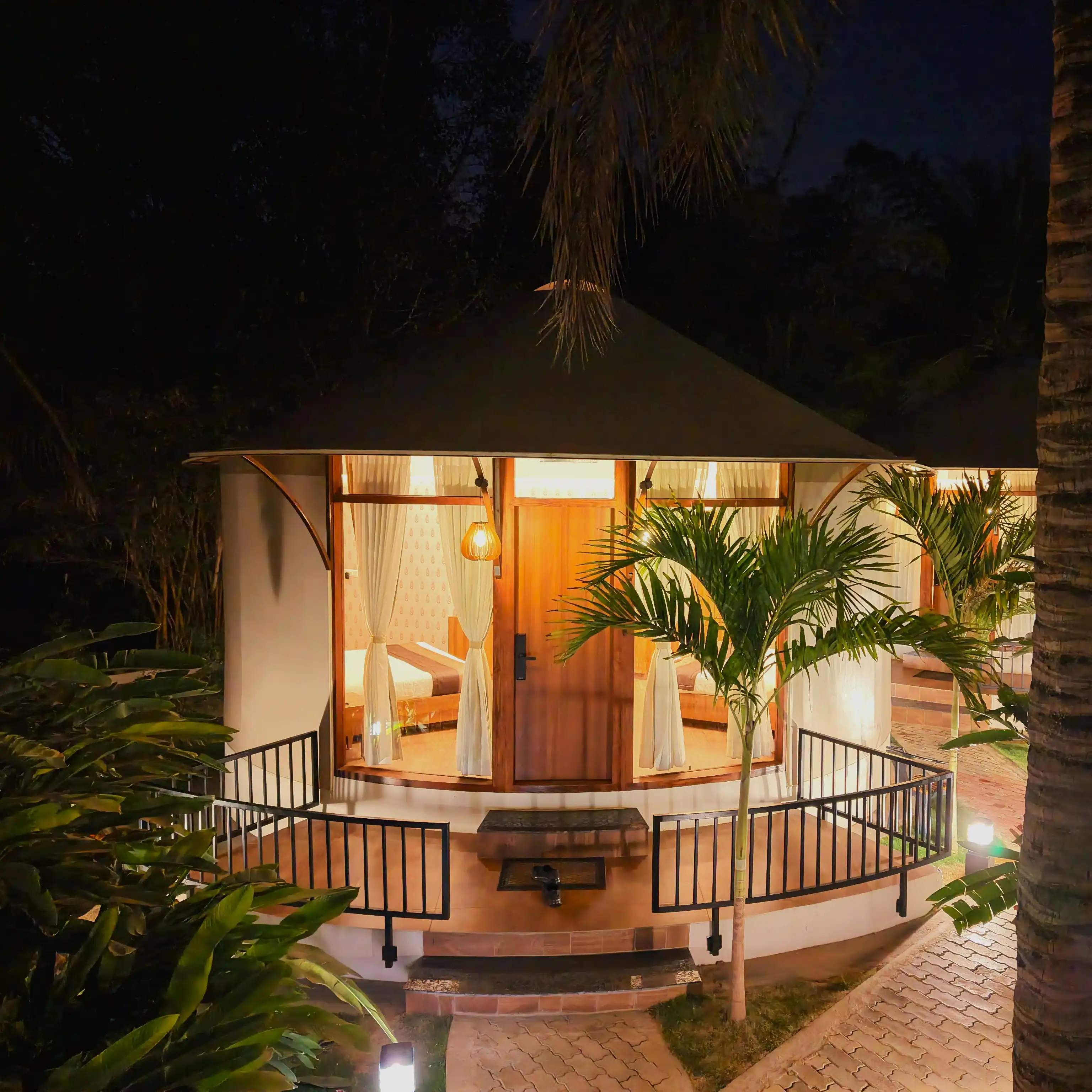
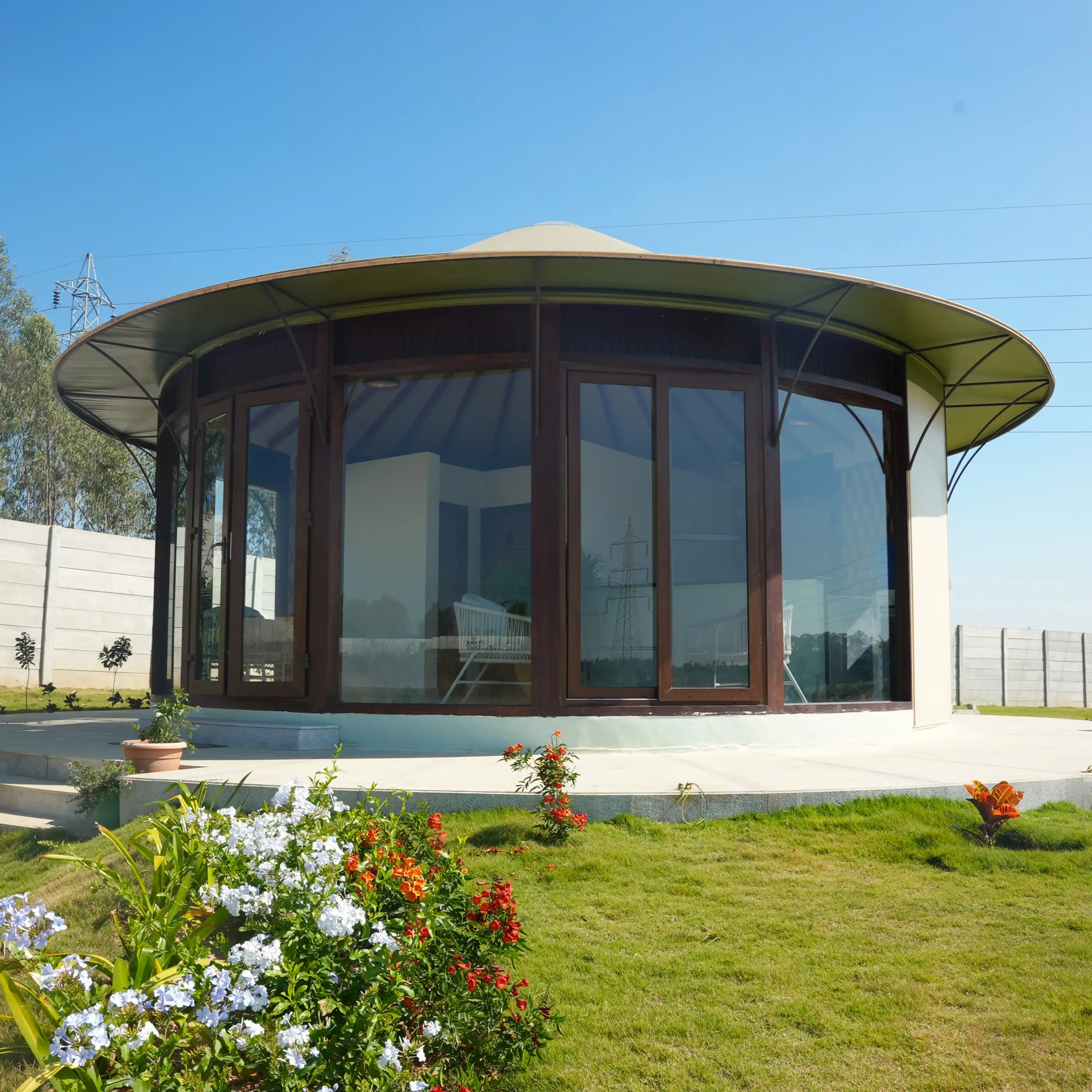
TOF uses rigid framed window systems with real glass so openings feel permanent and architectural.
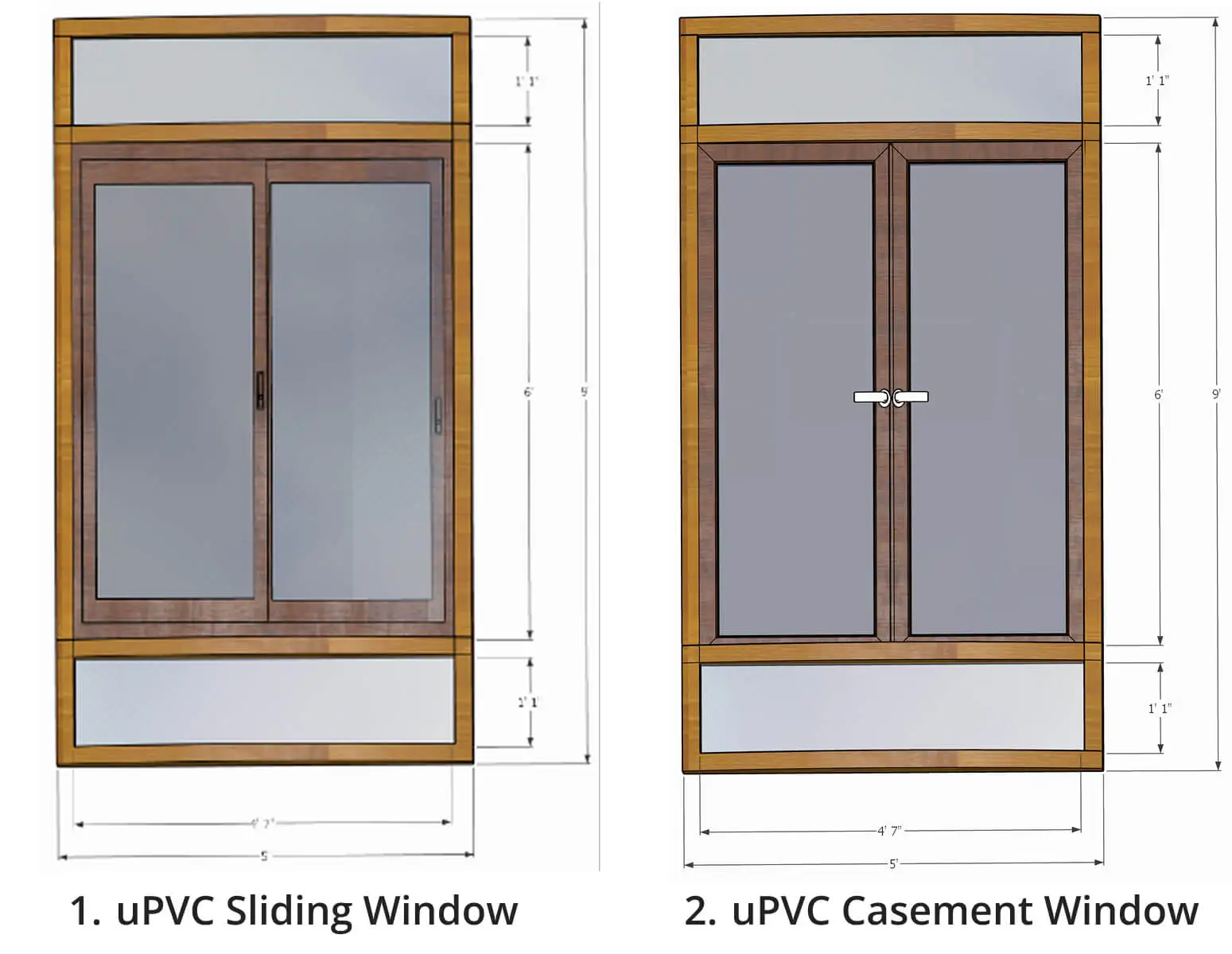
Standard Window Modules
- uPVC sliding windows: 6’ × 9’
- uPVC casement windows: 6’ × 9’
- Fixed clear glass panels: 7’ × 5’
- Full-length sliding units: 7’ × 5’
All window systems sit within the same structural frame logic as doors.

Window Customization Begins With the Frame
Customization in a TOF yurt does not start with fabric or add-ons.
It starts with the frame.
Because TOF treats window frames as structural elements, they can be shaped, extended, and composed during the design stage without compromising the yurt. This is where TOF stands apart.
TOF is the only yurt manufacturer to offer true window block customization, not just size changes or fabric variations.
Window Blocks, Not Window Cutouts
Each TOF window is designed as a complete window block. The frame, glazing, overhang, and weather protection are resolved together.
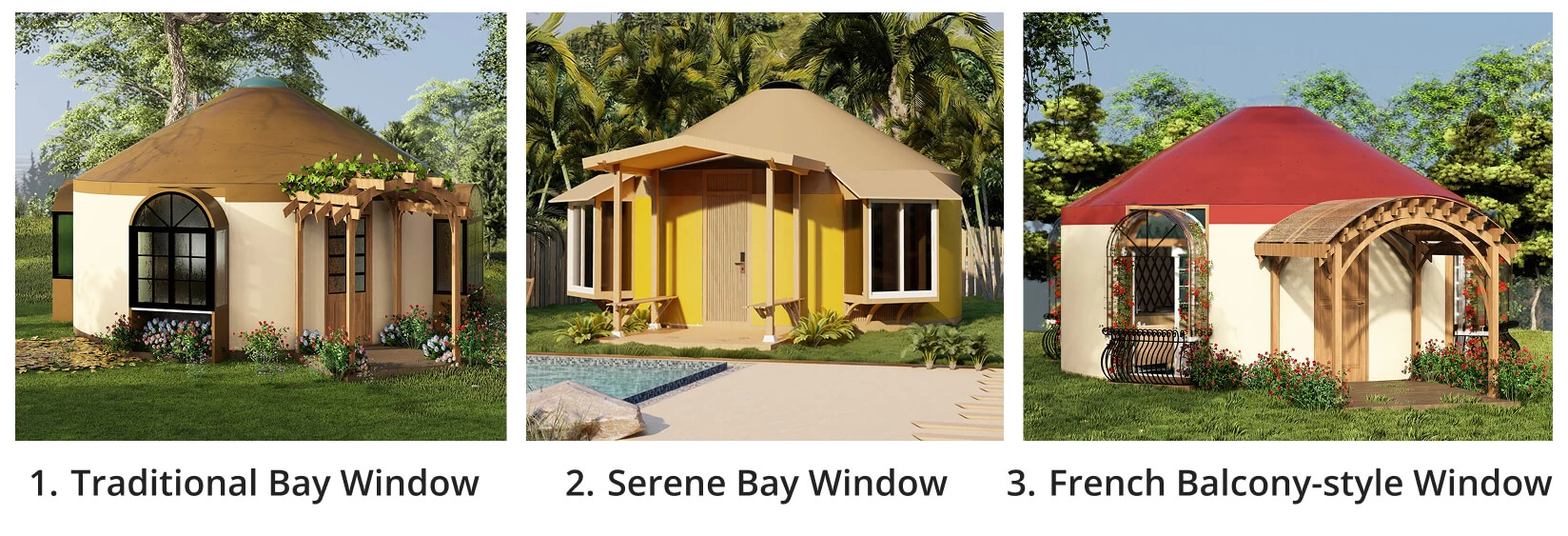
This allows architectural window types that are not possible with roll-up or zip-based systems. Common configurations include:
- Traditional bay windows
- Serene bay windows
- French balcony-style windows
These are not decorative additions. They are framed extensions that remain part of the structural opening.
Overhangs Designed as Part of the Opening
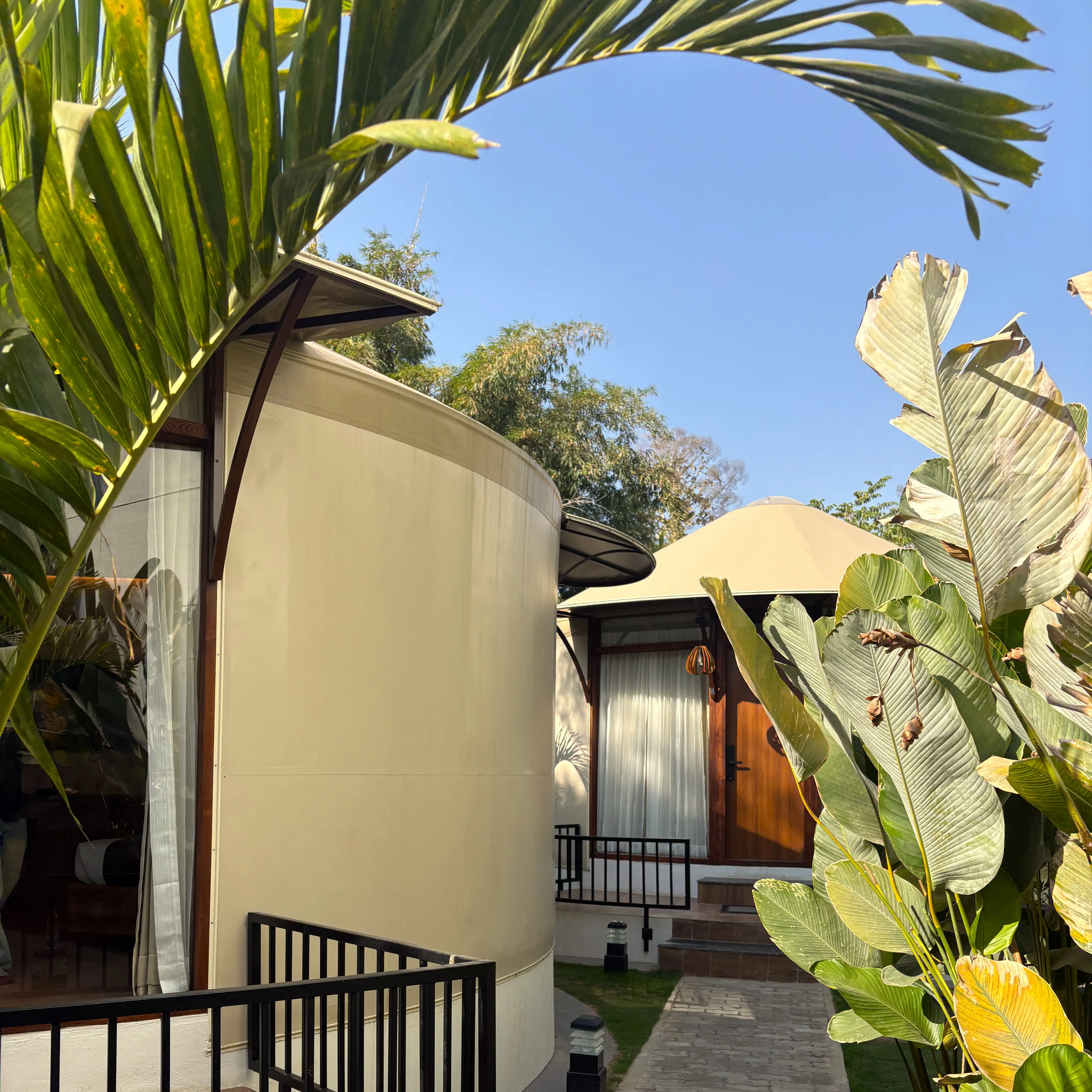
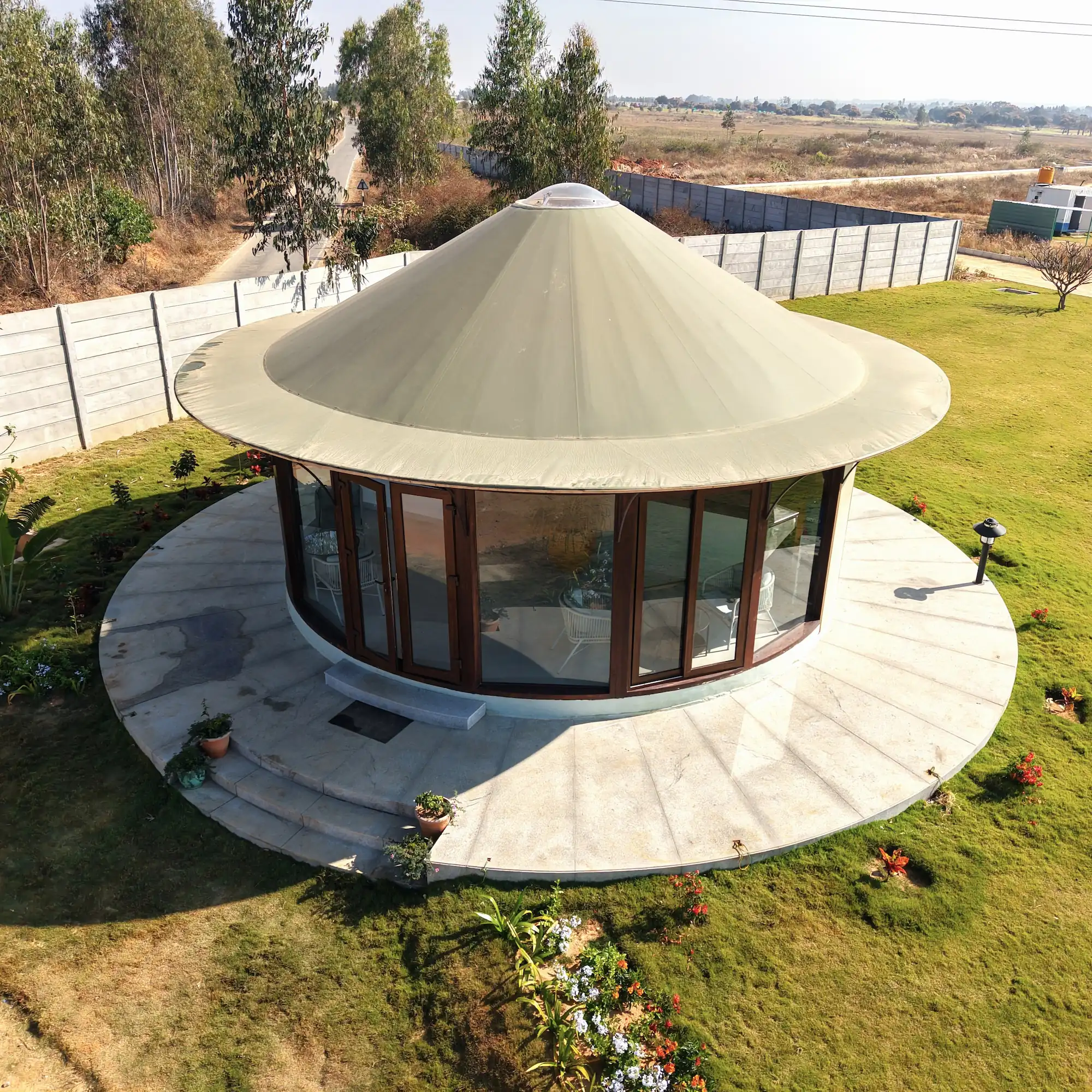
All TOF doors and windows come with integrated awnings as a standard feature. This is not an upgrade. It is part of how the opening is designed to perform.
Overhang options include:
- Leaf overhang (standard)
- Colonial overhang
- Classic overhang
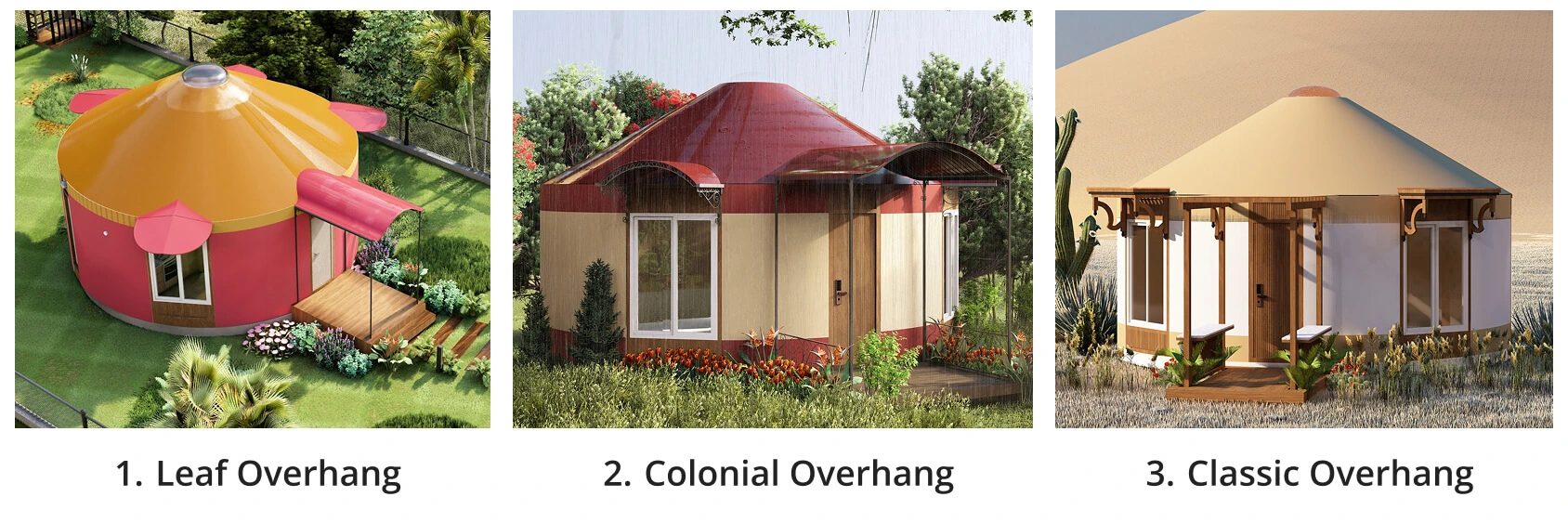
Each overhang is proportioned to the opening it protects. In addition, doors receive a complementary pergola-style overhang. This shields the entry from rain, sun, and harsh weather while maintaining visual continuity.
Why This Matters
By resolving windows as framed blocks instead of fabric openings:
- Weather protection improves
- Fabric stress reduces
- Visual language stays consistent
- Long-term maintenance drops
Most yurts customize openings by adding layers. The Out Factory customizes by designing the opening itself. That difference shows over time.
Designing Panoramic Views Without Weakening the Yurt
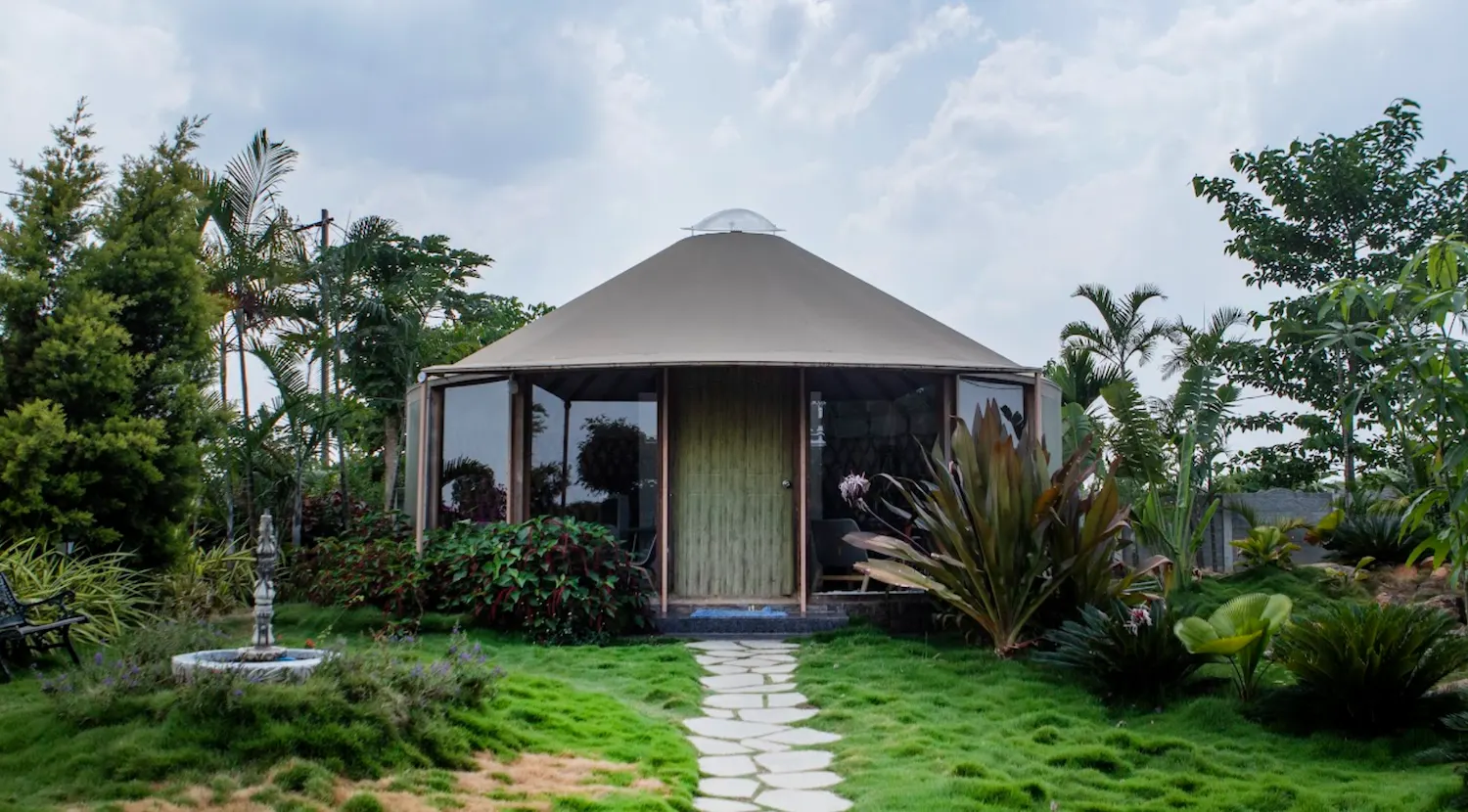
TOF regularly designs standardized window frames up to 5’ wide. Panoramic views are achieved by aligning multiple framed windows side by side during design.
For example: Three 5’ framed windows placed together gives a 15’ wide opening! This works because the load is resolved in the frame, not the fabric.
Climate-Specific Opening Strategies
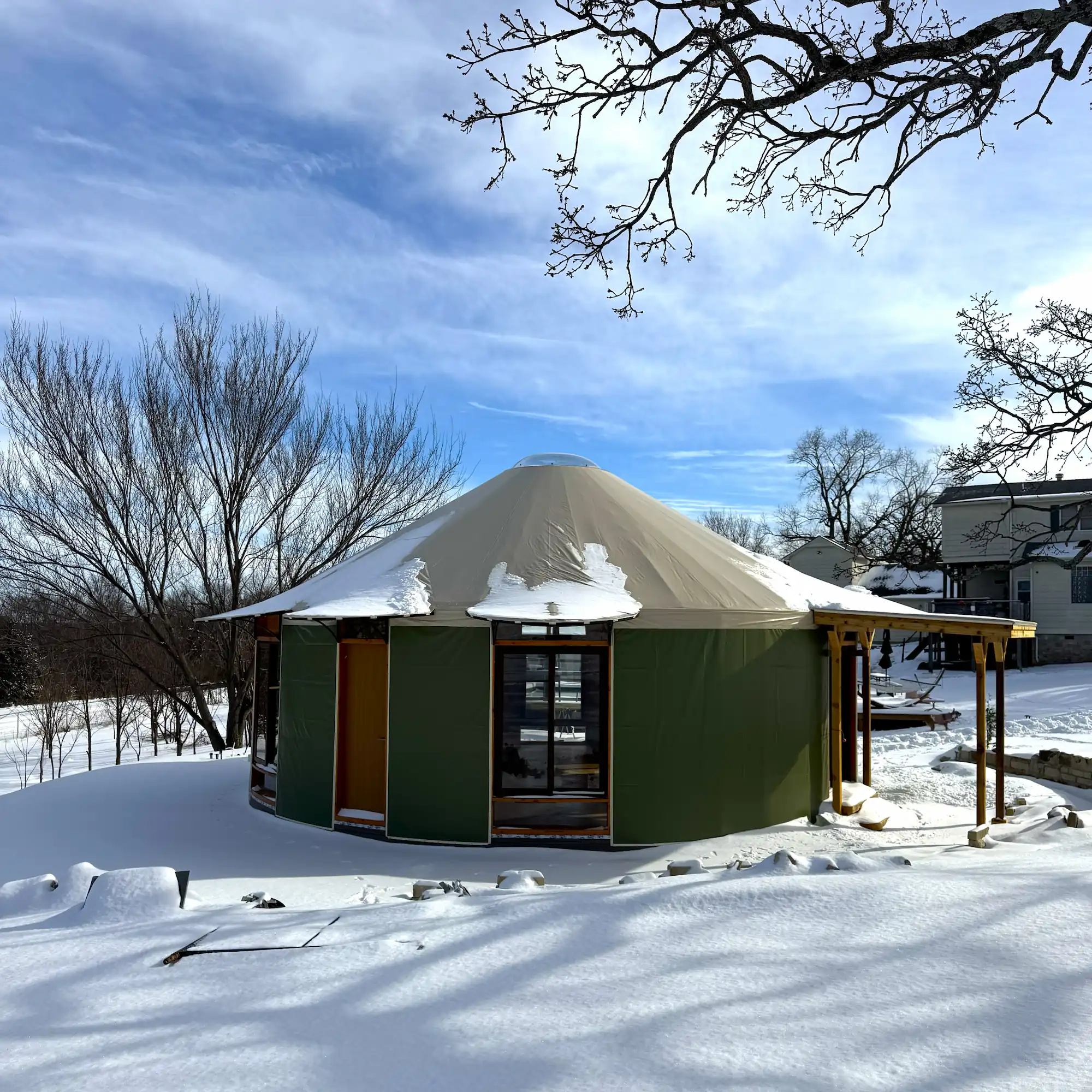
In warm and temperate regions, openings support natural ventilation and daylight. In colder regions, clients often prefer fewer openings. Temperature and airflow here are controlled through HVAC systems rather than passive ventilation.
In cold climates:
- Openings are limited by design
- Frames prioritize airtight sealing
- Glazing focuses on insulation
The frame system remains the same. Only the opening strategy changes.
Small Openings Still Need Real Frames
Even service openings use full frames.
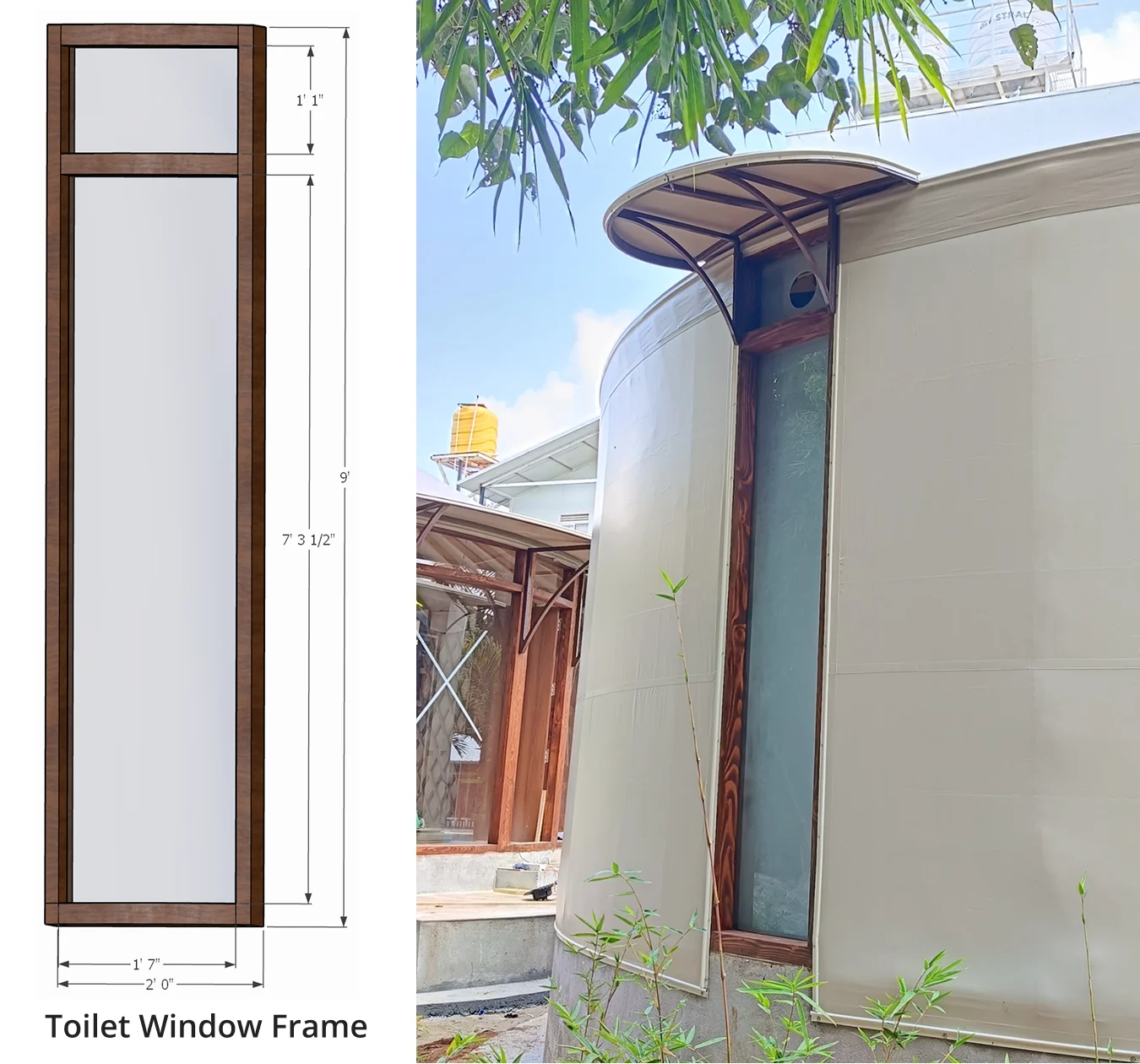
Toilet Window Module
- 9’ × 2’ framed opening
- Frosted glass
- Controlled daylight and privacy
Some designs extend this to 3’ width with sliding panels. Small frame, same structural intent.
Why Placement Is a Design Decision
There is no default layout that fits every site. Placement responds to:
- Site conditions
- Views
- Climate
- Use case
What never changes is the frame-first approach.
Final Thought
TOF did not reinvent windows. We redefined how they belong to the structure. By resolving openings at the design stage and making frames structural, TOF replaced fabric compromises with architectural clarity.
Unthink roll-ups.Think frames, structure, and light.
uniquely yours?
Explore Limitless options in our 3d yurt builder
and bring your vision to life

Share Blog
.jpg)
.jpg)
.jpg)
.jpg)
.webp)