

.webp)

Circular Buildings, Not Permanent Waste: Why Yurts Are Built for the Circular Economy

.avif)
Traditional thinking views building as a permanent, irreversible act. The future of architecture - and sustainability - lies in designing structures that are meant to be taken apart and reused.
When we talk about sustainable building, the conversation usually revolves around insulation, solar panels, and LED lighting. It’s a conversation about less bad construction - making a permanent building slightly less damaging to the environment.
But that approach ignores the single biggest problem in the building lifecycle: Demolition Waste.
The truth is, most modern buildings fail the fundamental test of a sustainable future because they are not designed to be taken apart. They are designed to become permanent, irreversible waste. That failure is massive: construction and demolition debris makes up a staggering 30–40% of global waste annually. A concrete building typically stands for 50–70 years, only to be followed by a colossal, environmentally toxic demolition.
The true goal of sustainability is not just minimizing damage; it is achieving reversibility. This is the core principle of the Circular Economy in Building.
The Problem With Permanence: Why Conventional Construction Fails the Circular Test
The conventional building model is Linear: Take → Make → Dispose.
A construction site is a textbook example of this linear thinking. You mix concrete, embed rebar, layer materials, and essentially create a multi-tonne, composite object that is structurally designed to be irreversible. Less than 1% of buildings are currently designed for true disassembly and reuse. The remaining 99% will be ground up into toxic landfill material decades from now.
If we are serious about achieving ambitious ESG (Environmental, Social, and Governance) goals and addressing climate change, we must fundamentally challenge the notion of "permanent" construction.
Yurts: Circular Architecture Since 1200 AD (Not a Trend)
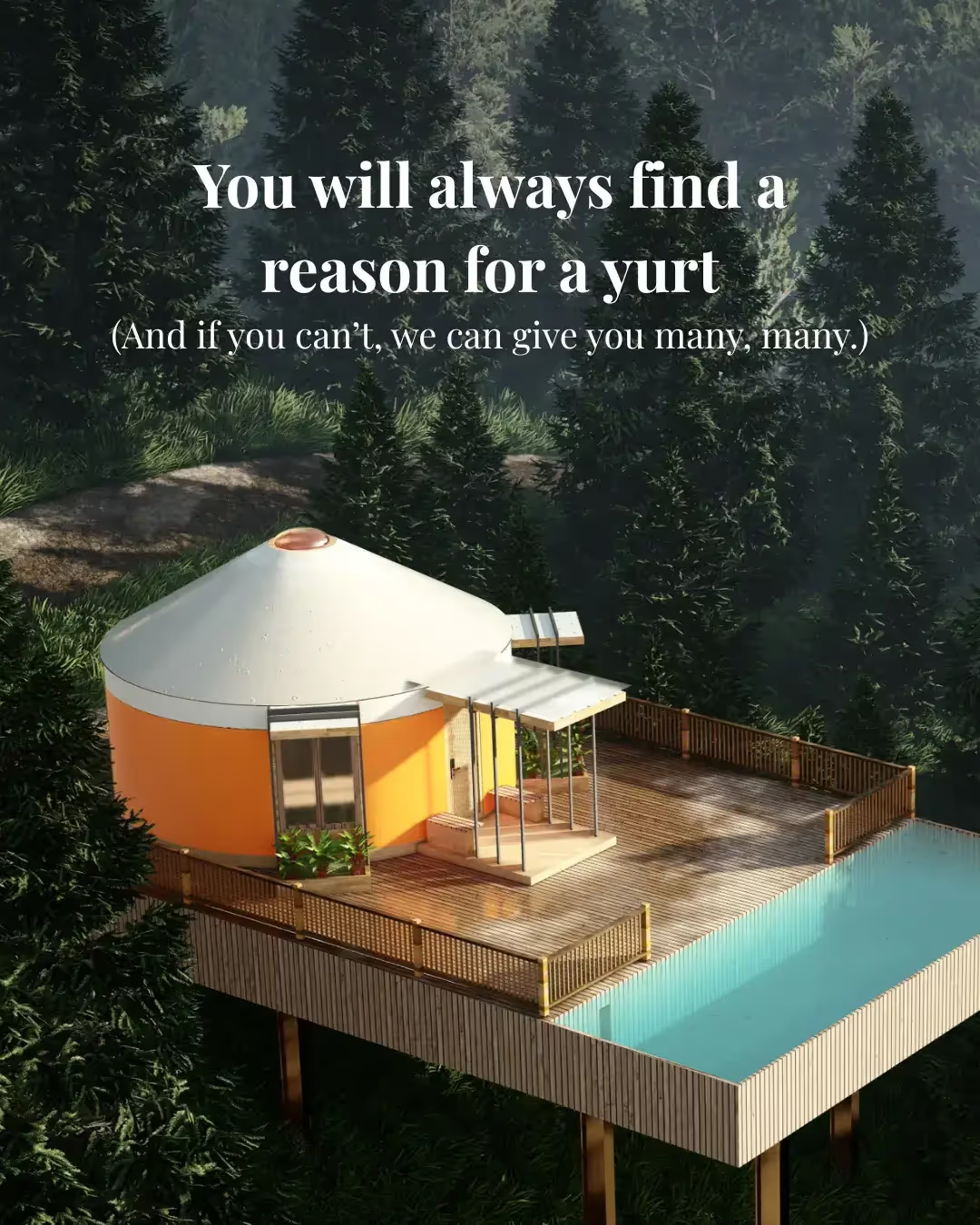
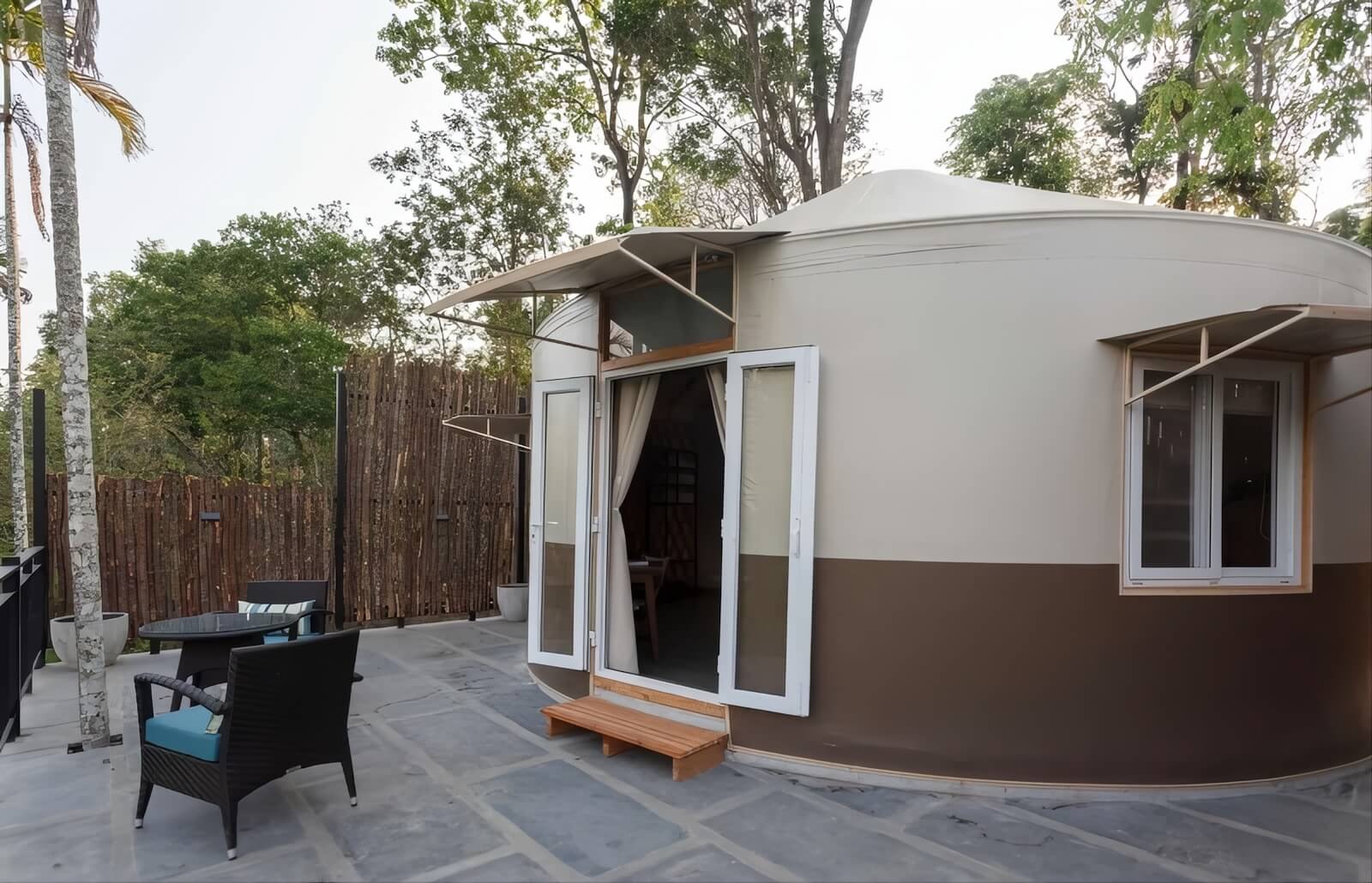
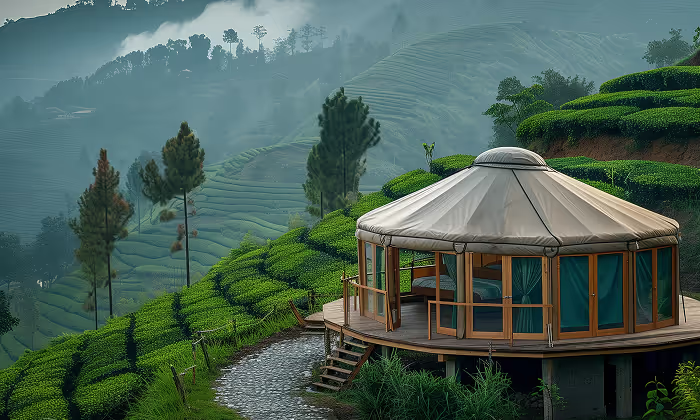
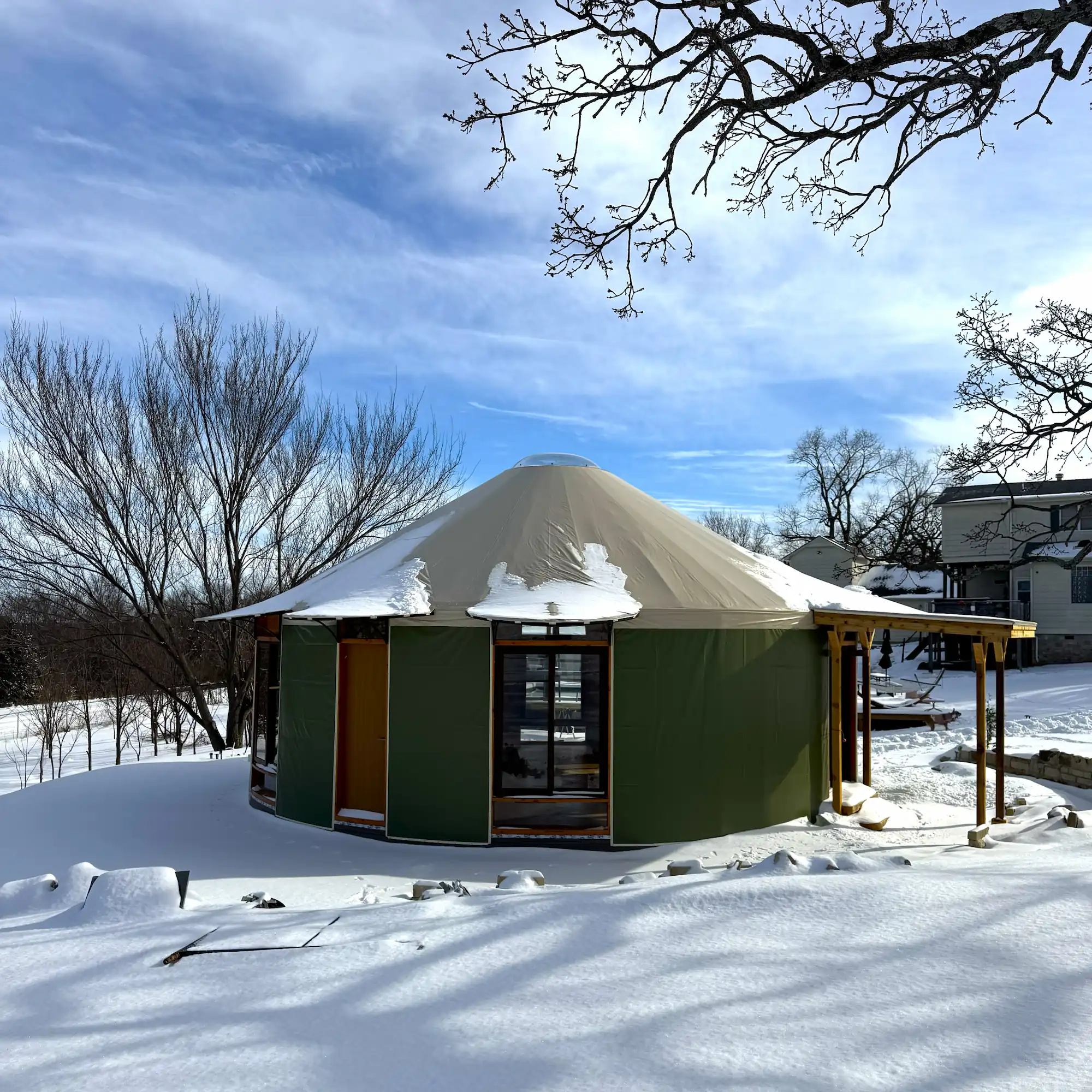
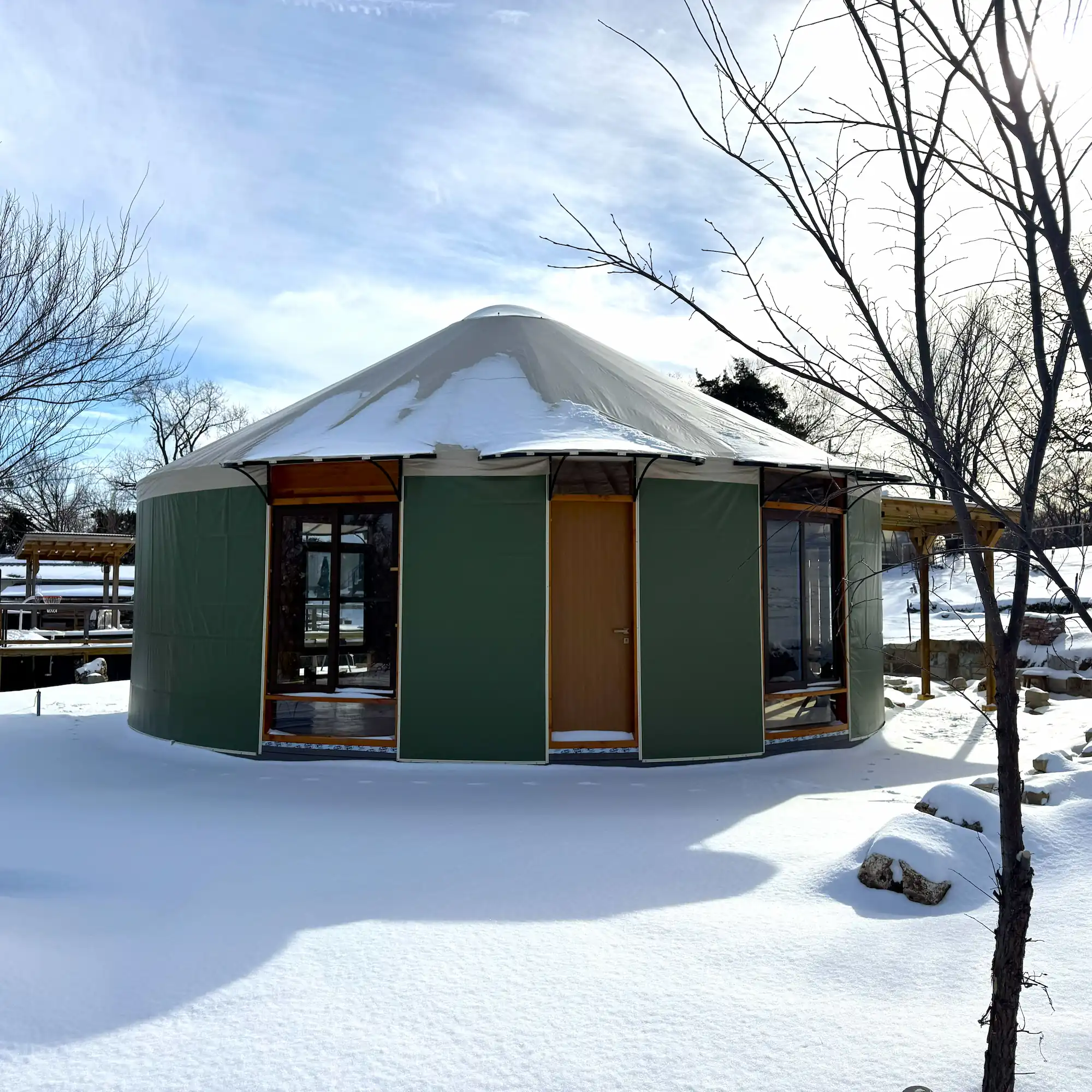
This is where the ancient wisdom of the yurt provides a powerful, ready-made solution. The yurt is not a sustainable trend; it is a piece of architecture that has been circular by design for millennia.
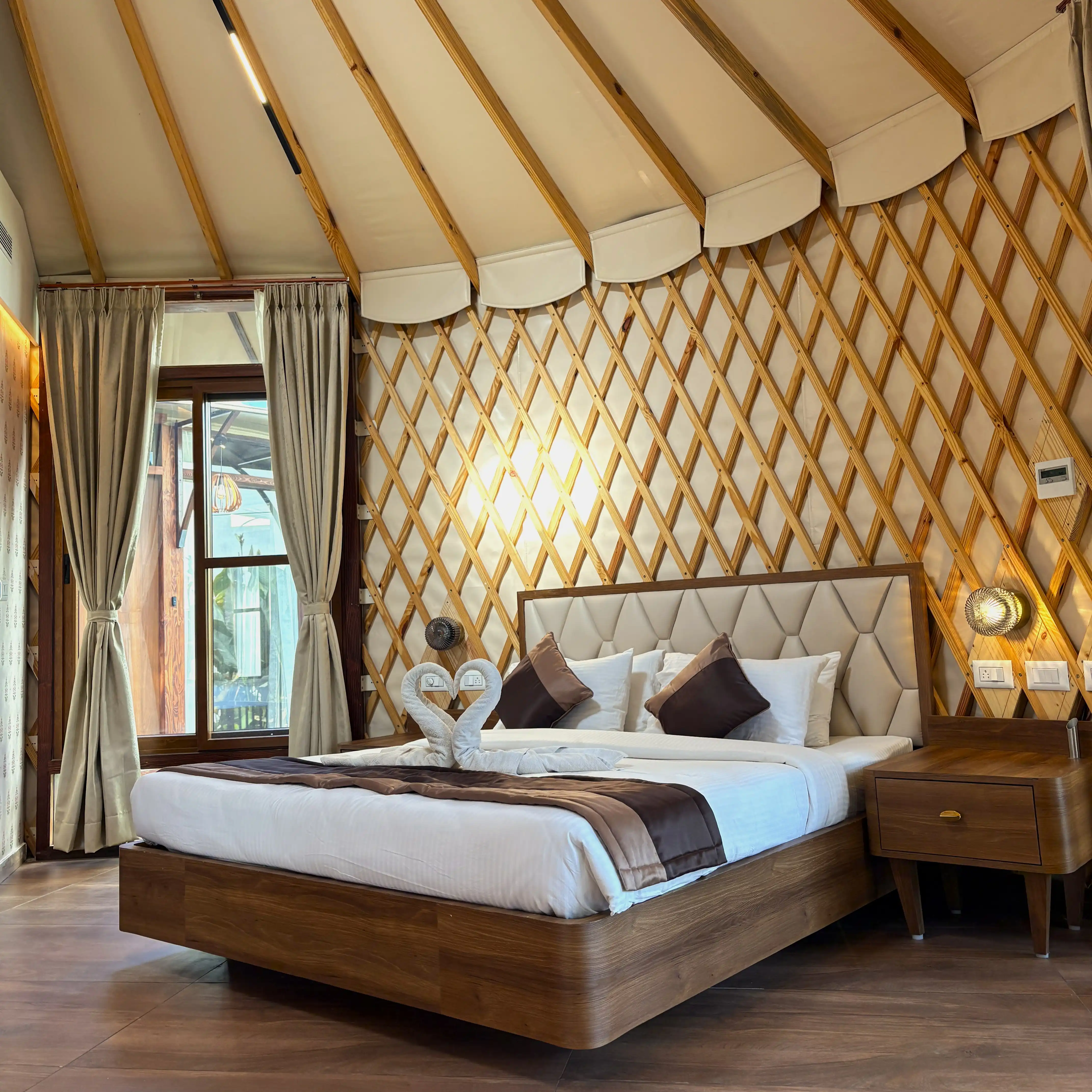
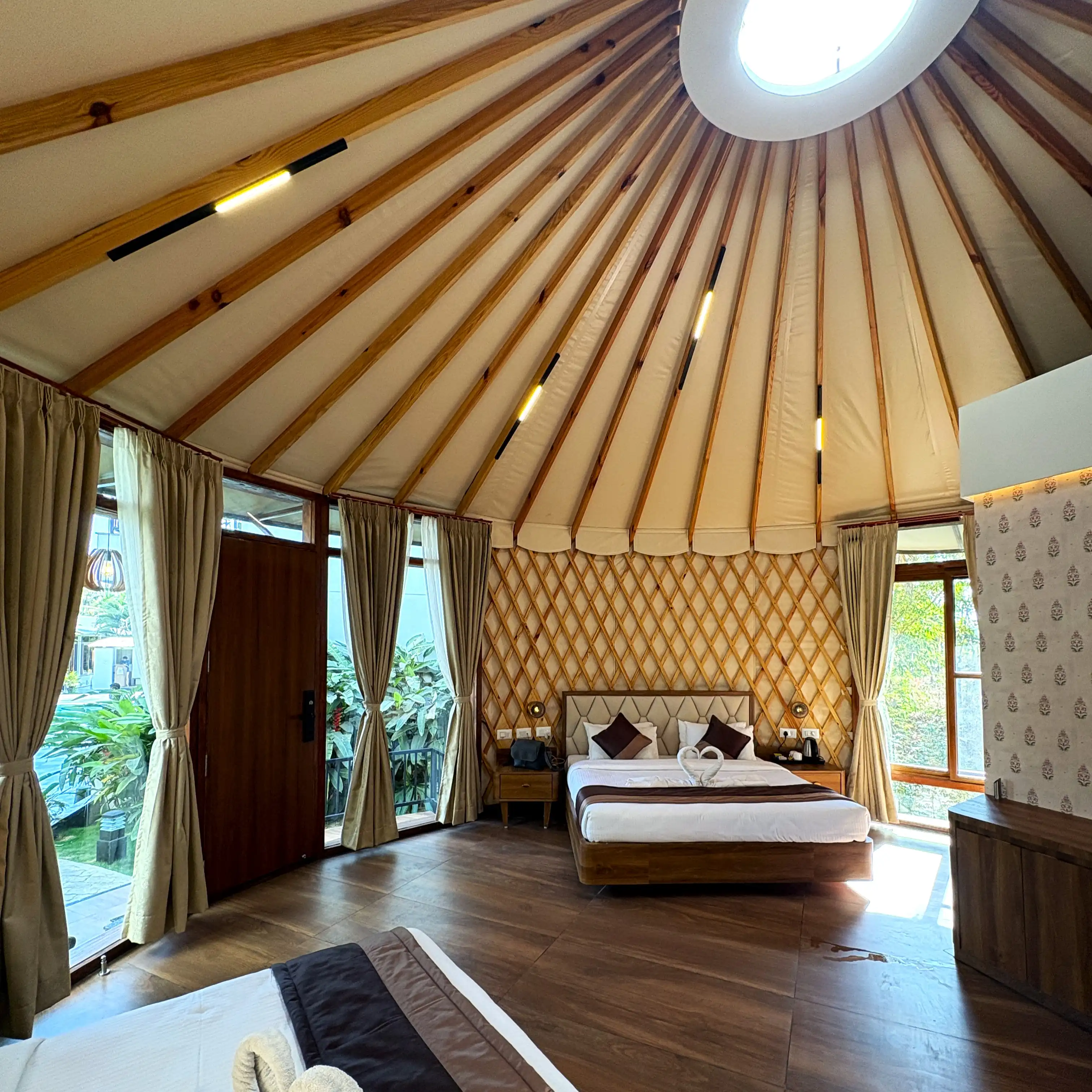
The entire structure - from its wooden lattice walls (khana) to its roof rafters (uni) - is not nailed, glued, or mortared. It is connected by pins, tension cables, and steel brackets.
The entire asset can be disassembled into its individual component streams, ready for inspection, repair, transport, and complete reuse. This means the structure has an exceptionally long Product Life Cycle and a dramatically low impact at the End-of-Life stage.
The Circular Advantages of a Modern Engineered Yurt
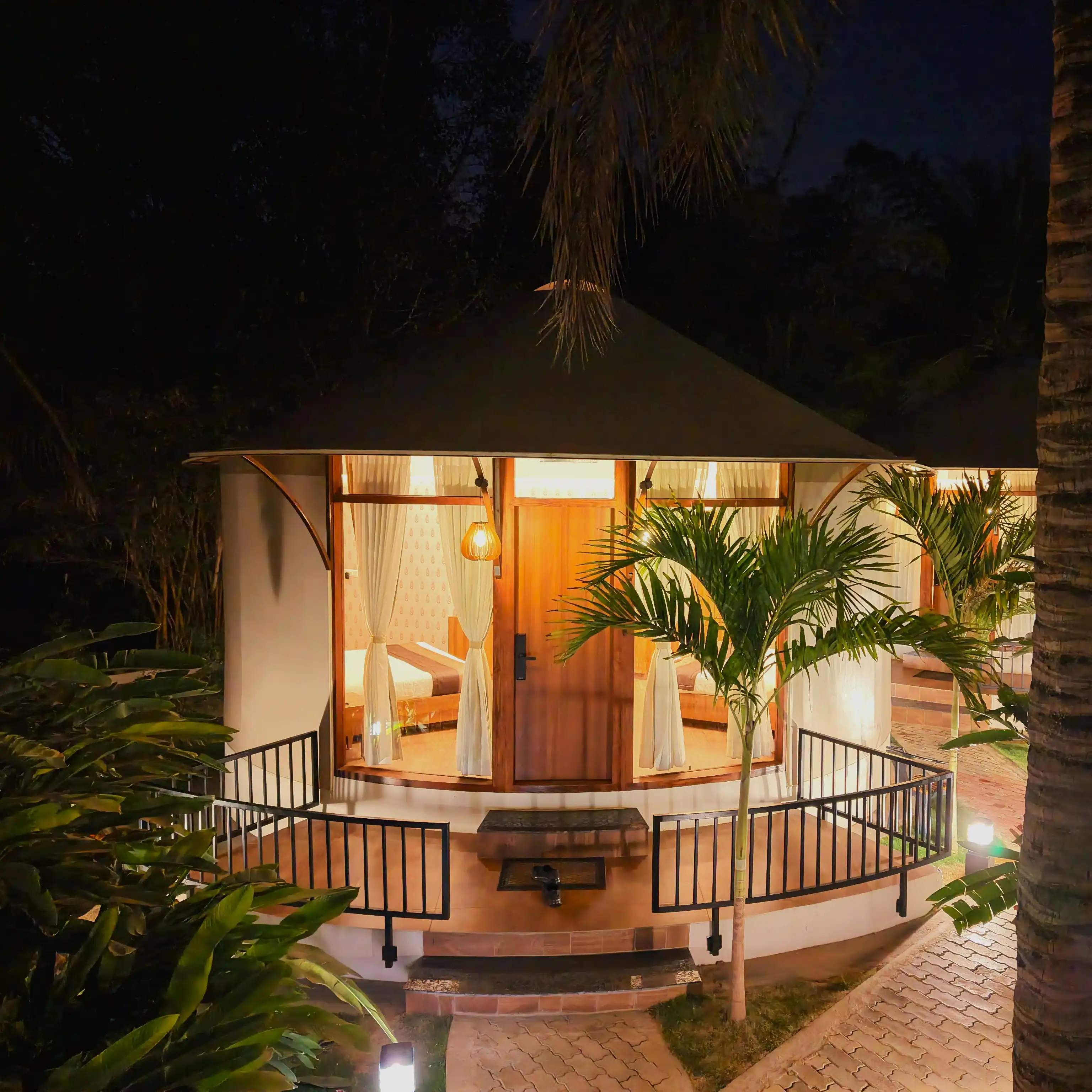
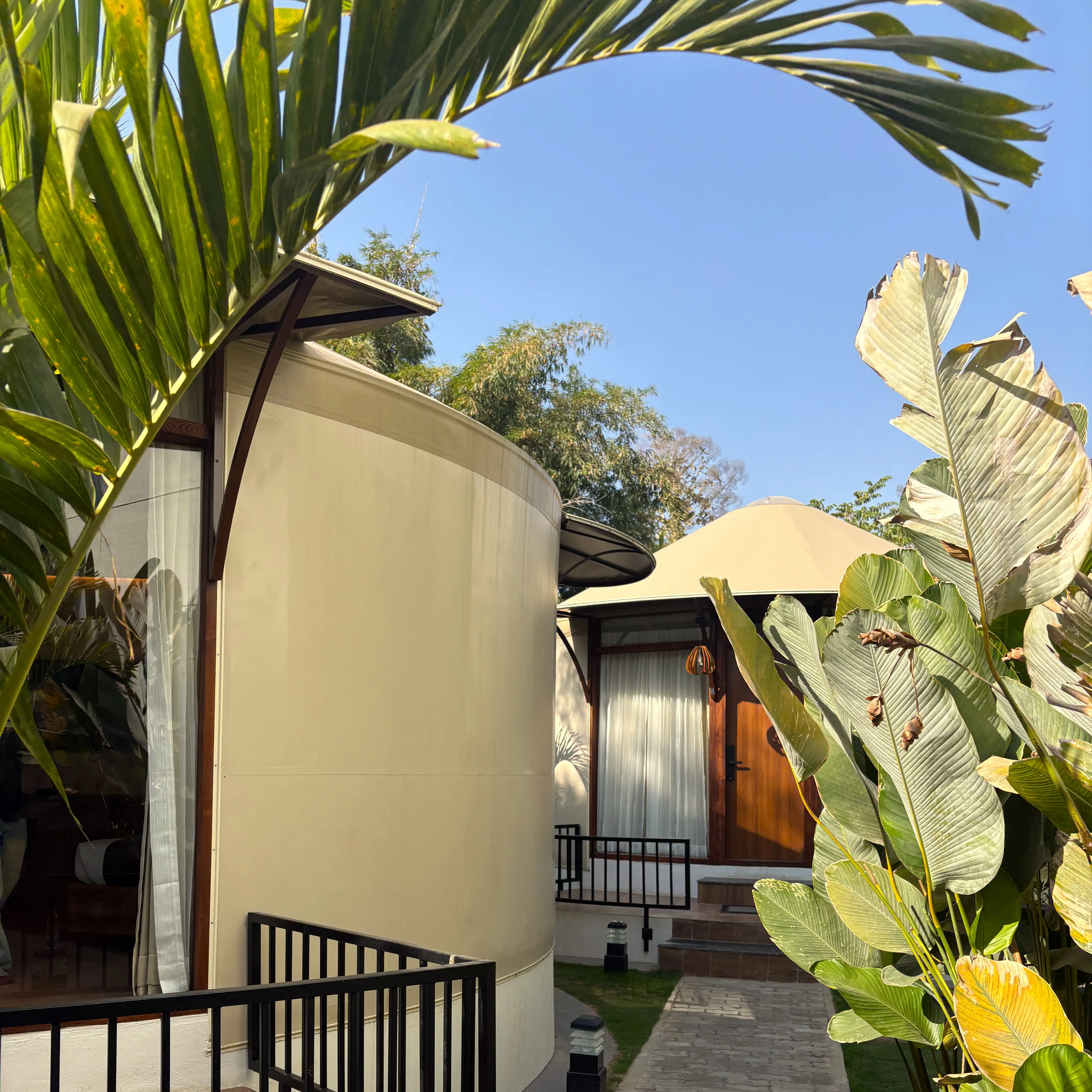
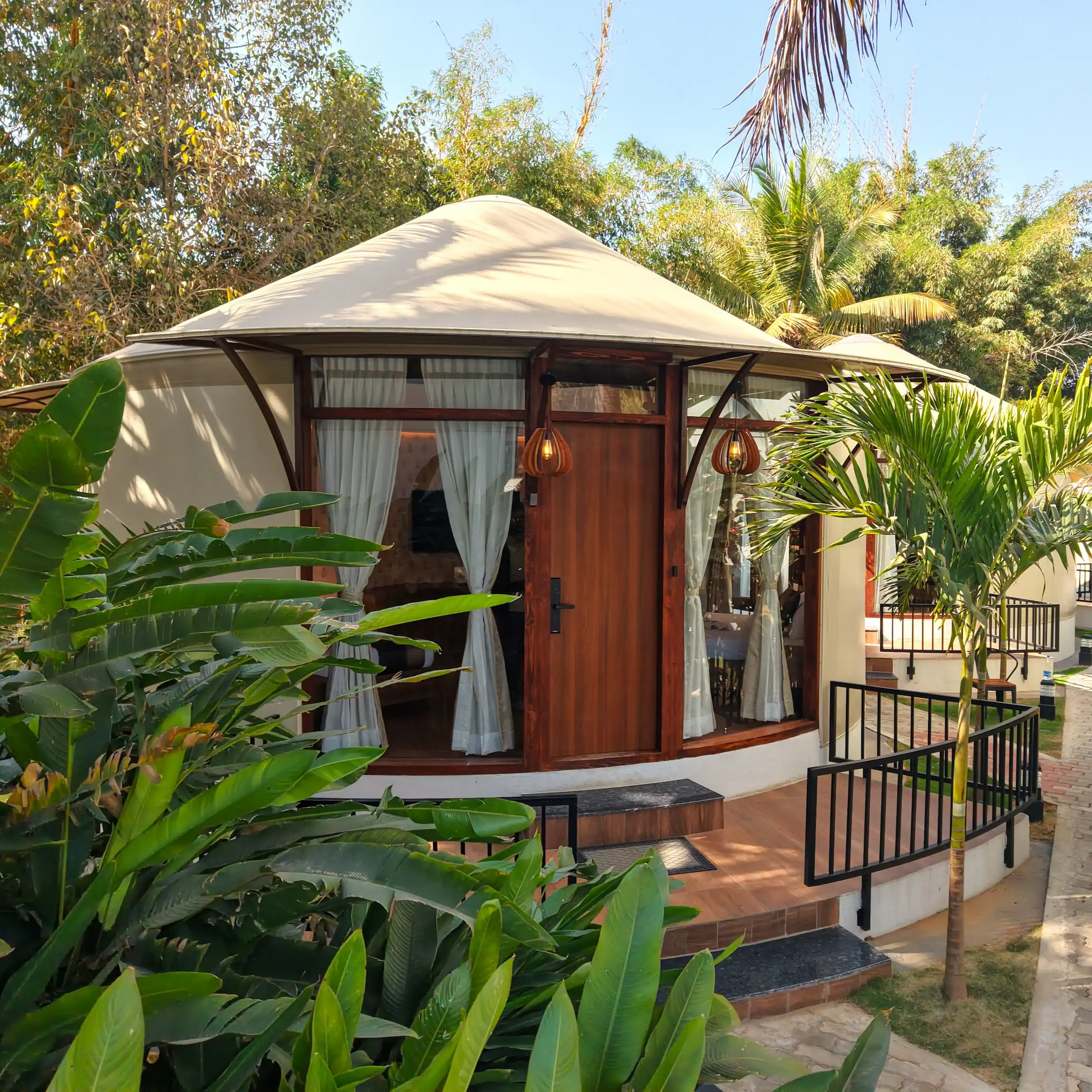
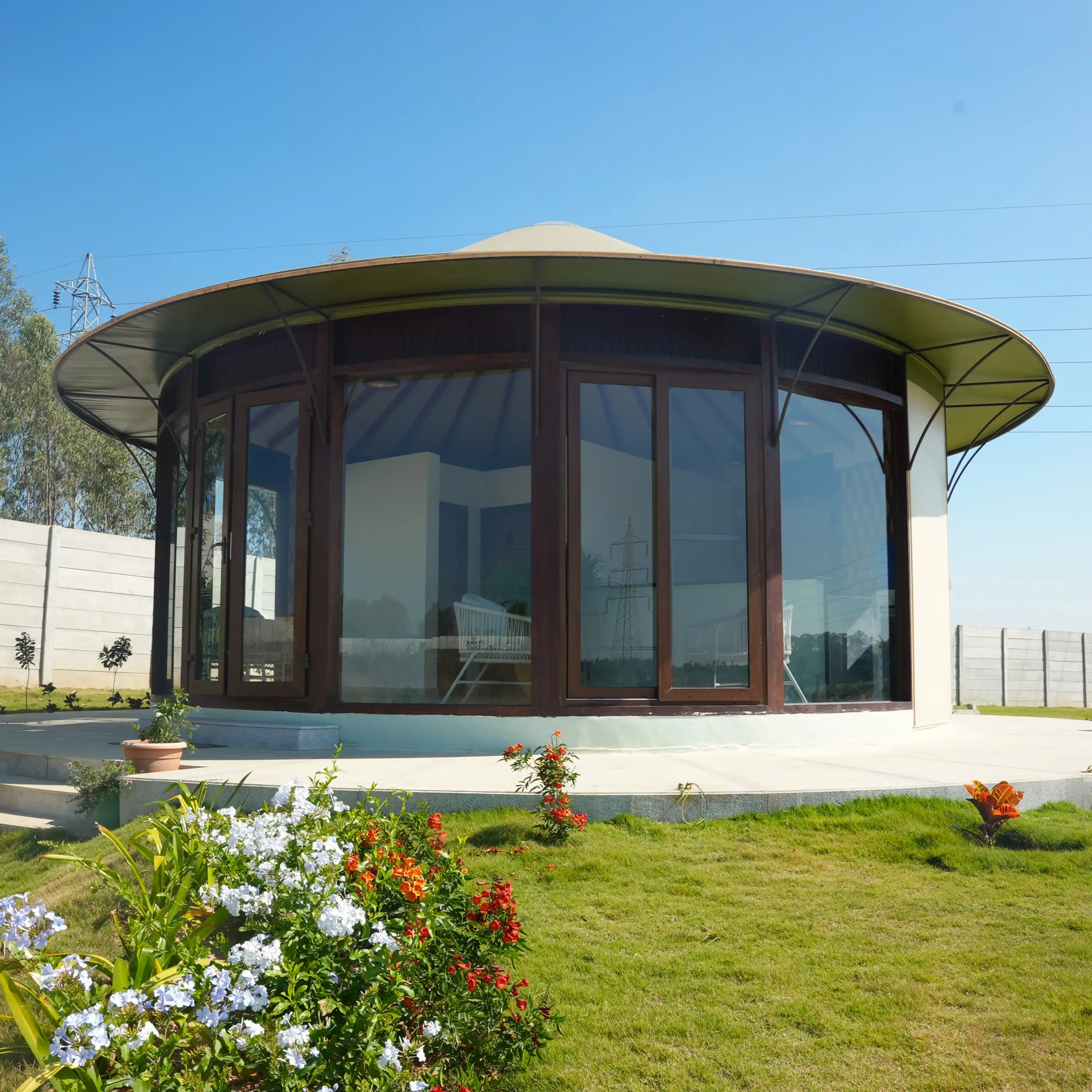
Our goal at The Out Factory has been to take the original circular wisdom of the Mongolian Ger and elevate it with modern, engineered materials. This process delivers specific, measurable benefits that appeal directly to the Circular Economy model:
- Design for Disassembly: The structure can be fully installed in as little as 72 hours and fully uninstalled in a single day, with all components ready for reassembly at a new location.
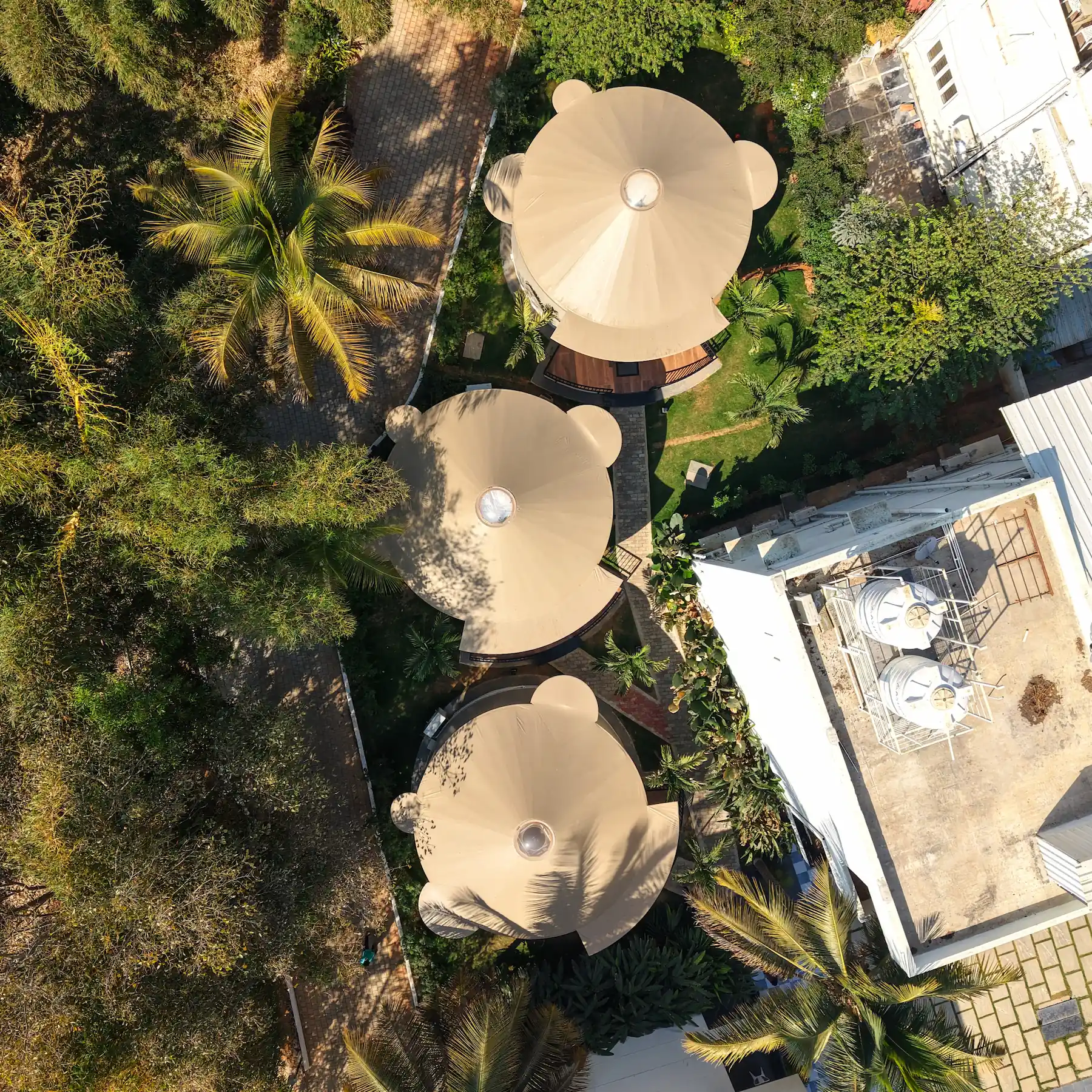
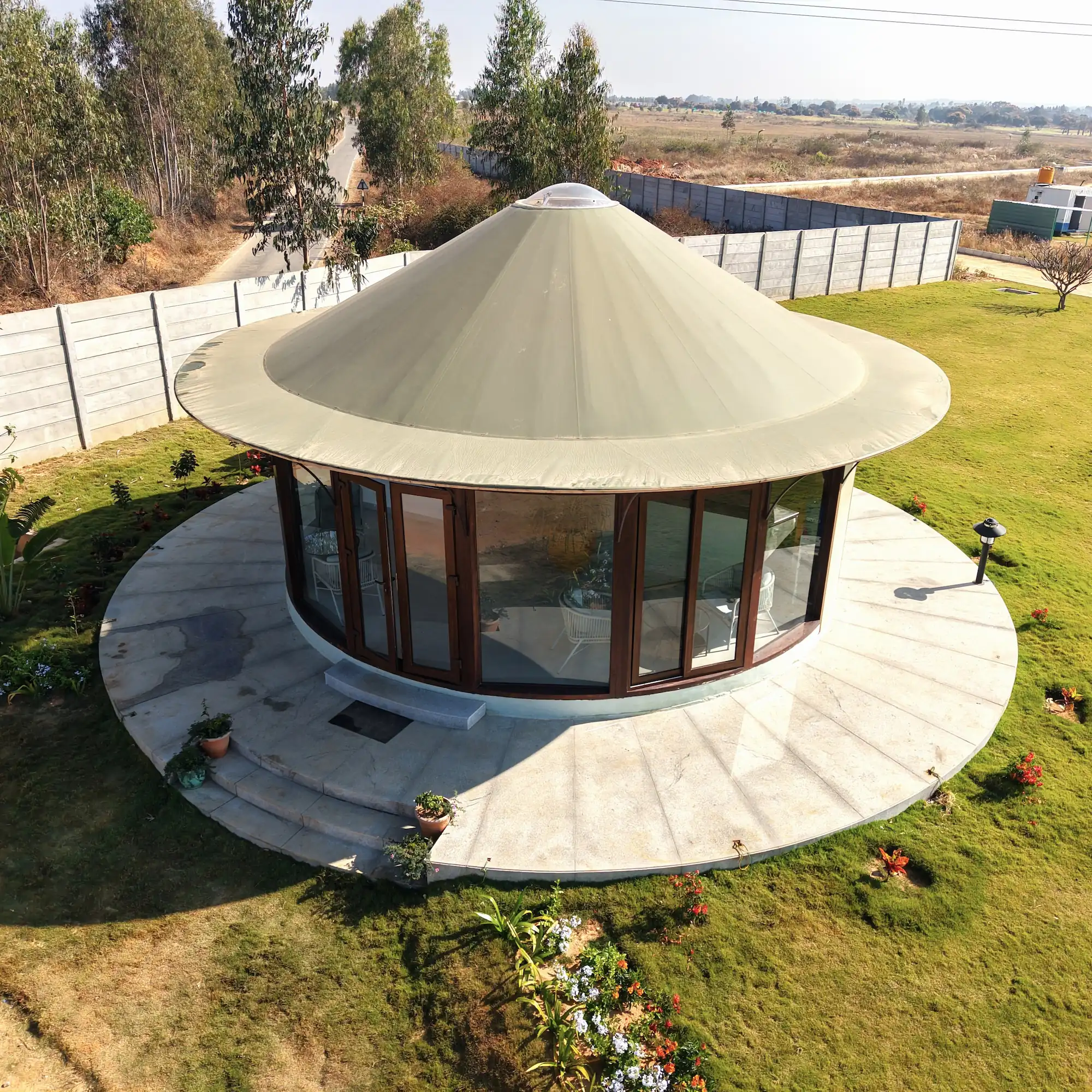
- Minimal Land Scars: The structure does not require permanent foundations. It sits on a simple platform, meaning the land can be returned to its original state within days of removal. Modular, demountable structures can reduce lifecycle carbon emissions by 30–60% simply by enabling relocation and reuse.
- Low Embodied Carbon: By using timber-framed systems and advanced technical fabrics instead of concrete and steel, we ensure a significantly lower embodied carbon footprint at the manufacturing stage.
Component Reuse: Individual components - a single lattice piece, a fabric wall, a rafter - can be replaced, repaired, or upgraded independently, eliminating the need to dispose of the entire structure due to a single failure.
Real-World Impact: Solving Modern Problems with Ancient Design
This circularity is not just theoretical; it's solving real business and community problems today:
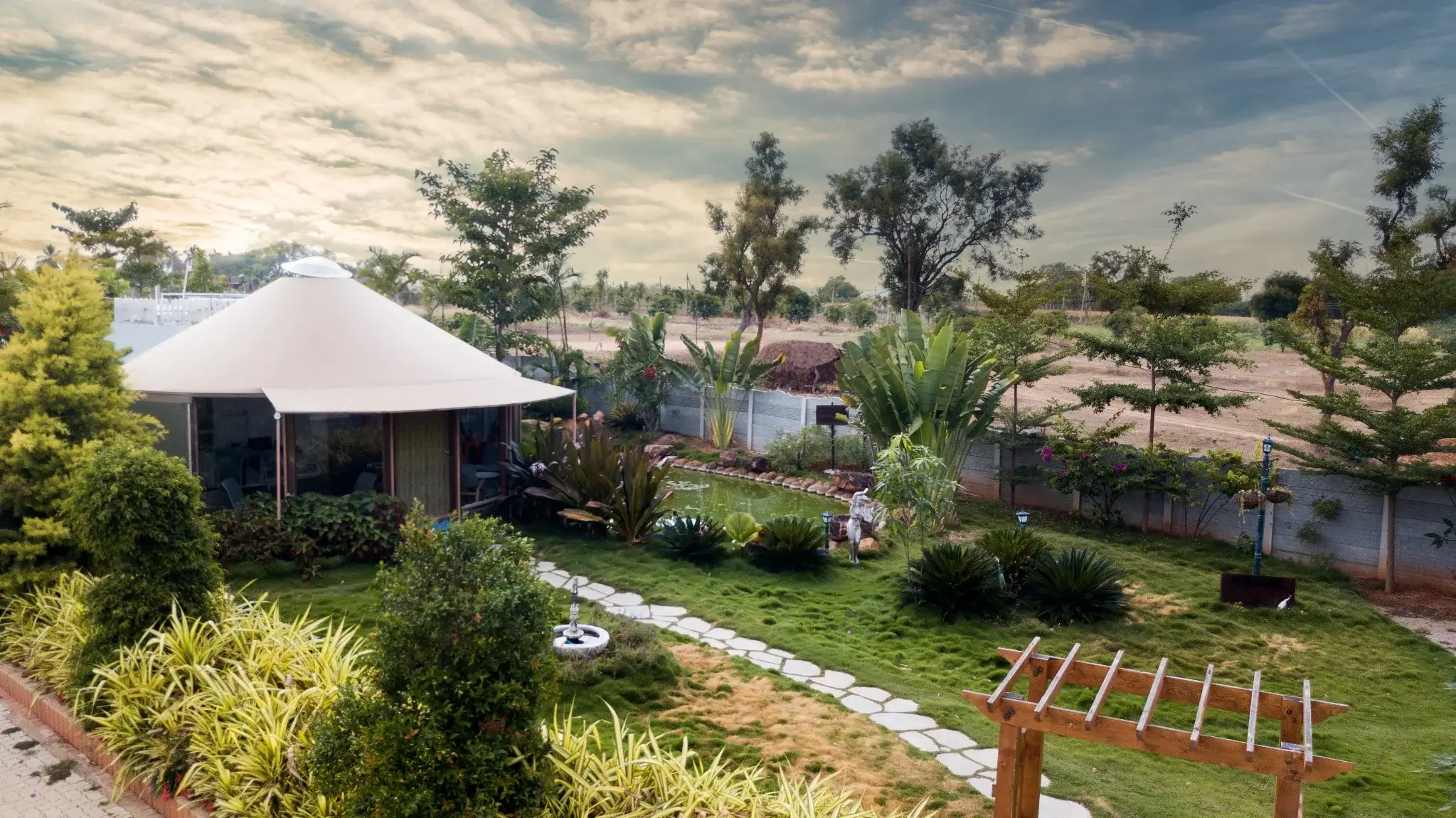
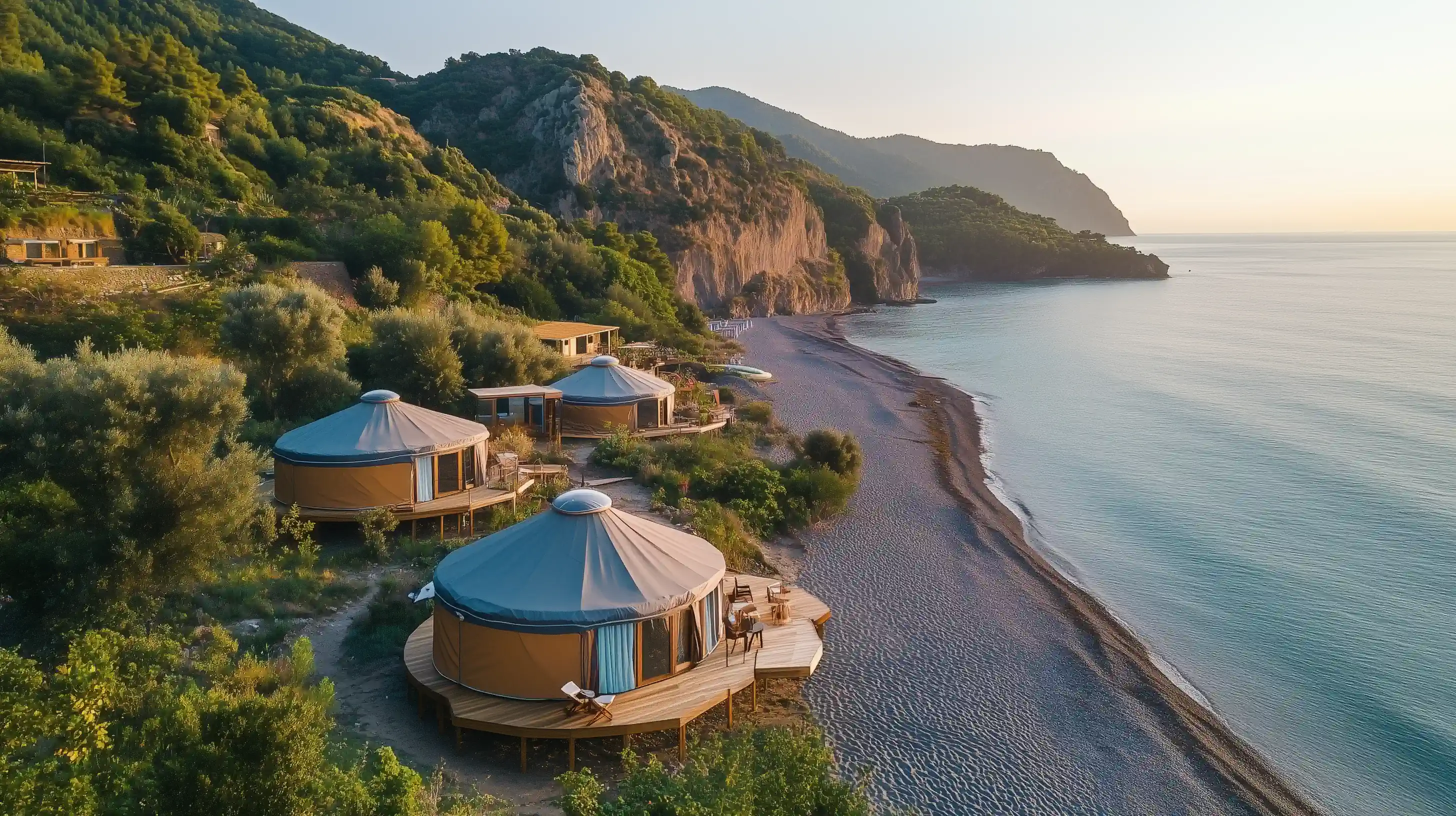
- Temporary Tourism Infrastructure: Glamping resorts can test a market or use a seasonal location without permanently altering a fragile environment.
- Remote Housing & Disaster Relief: Structures can be rapidly deployed and relocated to provide dignified, high-quality, long-term shelter.
- ESG Reporting: Businesses can confidently report on their commitment to reducing construction waste and minimizing permanent land impact.
Unthinking Buildings
The building industry is held captive by the belief that permanence equals quality. We fundamentally disagree. Quality is about longevity through flexibility.
The Out Factory philosophy is simple: Unthink Permanence. Unthink Waste. We design yurts for those who choose to step away from conventional, irreversible buildings and toward something lighter, smarter, and infinitely more considered.
We are not building a temporary shelter; we are building an asset with a truly circular future.
This isn't just a philosophy; it's a practical business advantage. For resort developers, entrepreneurs, and organizations focused on real, measurable ESG goals, a circular approach is no longer optional - it's a competitive edge.
uniquely yours?
Explore Limitless options in our 3d yurt builder
and bring your vision to life
Share Blog
.jpg)
.jpg)
.jpg)
.jpg)
.webp)